
Research Snapshot
Piperine
A synthesis of the peer-reviewed evidence for Piperine across metabolism, neuroprotection, gut health and oxidation, graded by scientific consensus and reviewed by our Scientific Advisory Board.
See the Research
 Metabolism
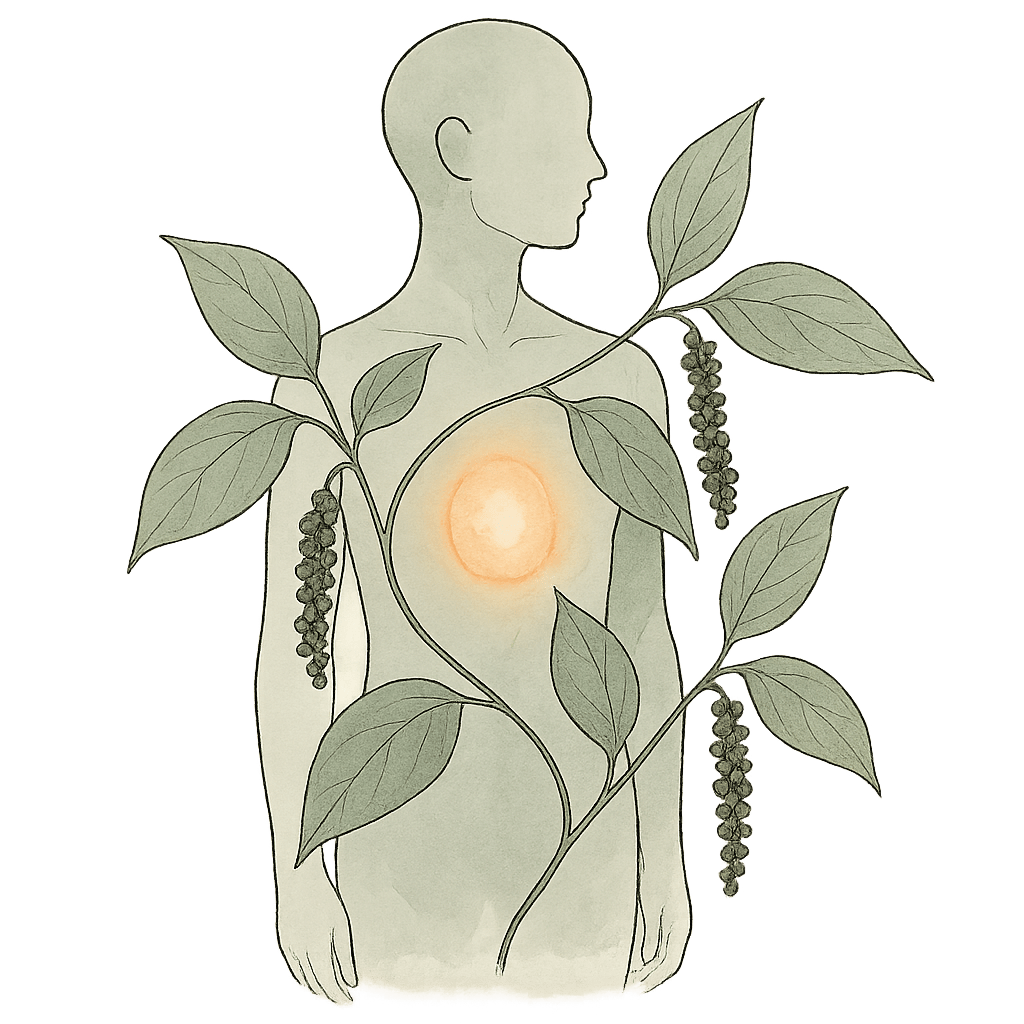
Does piperine improve metabolism?
Evidence from 12 studies
What the research shows
These studies suggest that piperine improves metabolism by enhancing lipid profiles, regulating carbohydrate and fat metabolism, and increasing metabolic rate in skeletal muscle.
View the top studies
Evidence-based Complementary and Alternative Medicine : eCAM Dorothee | L. E. Mballa et al. | 1 | 2021
Randomized Control Trial (RCT) , Animal Trial , Rigorous Journal
Piper nigrum leaf extract may prevent weight gain and possess cardioprotective activity with a strong antioxidant activity.
Clinical nutrition | Y. Panahi et al. | 306 Citations | 2015
Very Rigorous Journal , Highly Cited , Meta Analysis
Curcuminoid-piperine combination significantly improves oxidative and inflammatory status in patients with metabolic syndrome.
Molecules | P. Dludla et al. | 0 | 2023
Systematic Review
Piperine, the active ingredient in black pepper, is linked to improving blood lipid profiles, reducing cholesterol levels, and enhancing antioxidant and anti-inflammatory properties in overweight and obese individuals.
Chemico-biological interactions | P. Brahmanaidu et al. | 60 | 2014
Non-Randomized Control Trial , Animal Trial , In Vivo Experiment
Piperine supplementation at a dose of 40mg/kgb.wt significantly reversed HFD-induced alterations in rats, improving insulin and leptin sensitivity, ultimately regulating obesity.
 Neuroprotection
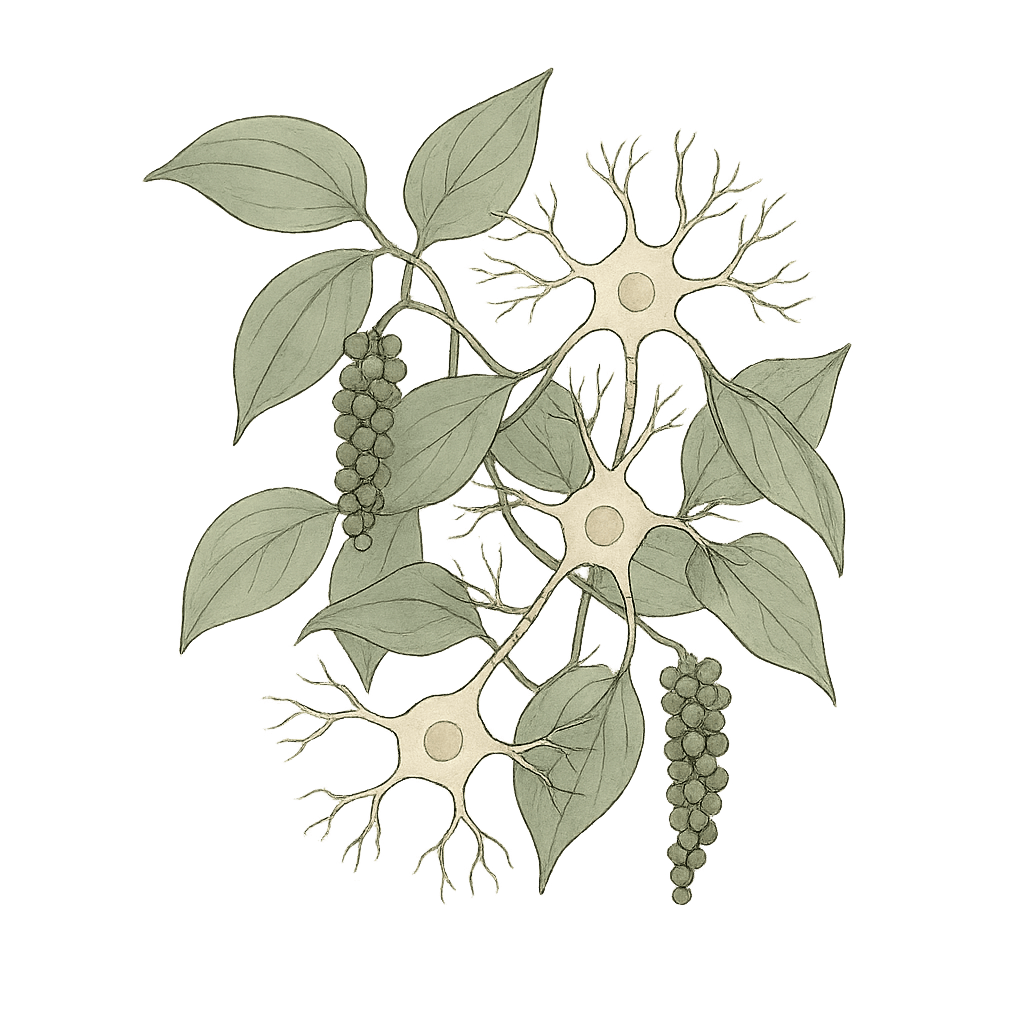
Does Piperine Extract (Piper nigrum) enhance neuroprotection?
Evidence from 10 studies
What the research shows
These studies suggest that Piperine Extract (Piper nigrum) enhances neuroprotection through mechanisms such as reducing oxidative stress, inhibiting neuronal apoptosis, and modulating neurotransmitter release.
View the top studies
Food and chemical toxicology | Pennapa Chonpathompikunlert et al. | 234 | 2010
Non-Randomized Control Trial , Animal Trial , In Vivo Experiment , Highly Cited
Piperine significantly improved memory impairment and neurodegeneration in hippocampus in an animal model of Alzheimer's disease.
Antioxidants | Himadri Sharma et al. | 1 | 2023
In Vitro Trial
Piperine extract (black pepper) exhibits neuroprotection by decreasing oxidative stress, restoring mitochondrial membrane potential, and showing potential anti-glycation and anti-AChE activities.
Journal of stroke and cerebrovascular diseases : the official journal of National Stroke Association | Shiyao Hua et al. | 19 | 2019
Non-Randomized Control Trial , Animal Trial , In Vivo Experiment
Piperine extract (Piper nigrum) alleviated neurological deficits and prevented ischemia-induced cellular damage in a rat model of cerebral ischemia.
Food chemistry | Lan Yu et al. | 18 | 2021
In Vitro Trial
Piperine, the most abundant compound in Piper nigrum extracts, has neuroprotective activities.
 Gut Health
Does Piperine Extract (Piper nigrum) support gut health?
Evidence from 10 studies

What the research shows
Piperine extract from Piper nigrum supports gut health by modulating gut microbiota, reducing inflammation, enhancing digestion, and providing protective effects for gastrointestinal wellness. These properties make it a valuable component in promoting gastrointestinal health and supporting related wellness.
View the top studies
Pharmaceutical Biology | N. Kondapalli et al. | 7 | 2022
Non-Randomized Control Trial , Animal Trial , Rigorous Journal
Piperine extract (Piper nigrum) has prebiotic potential, as it increases levels of beneficial gut bacteria like Lactobacillus and Bifidobacterium.
Phytotherapy Research | Lei Wang et al. | 6 | 2021
Non-Randomized Control Trial , Animal Trial , Controlled experimental study
Piper nigrum extract (PNE) attenuates food allergy symptoms and improves the Th17/Treg balance, supporting gut health.
Critical Reviews in Food Science and Nutrition | K. Srinivasan et al. | 640 | 2007
Highly Cited , Literature Review
Piperine enhances digestive capacity and reduces gastrointestinal food transit time by favorably stimulating digestive enzymes.
Journal of ethnopharmacology | Dong-hua Hu et al. | 62 | 2015
Non-Randomized Control Trial , Animal Trial
Piperine may contribute to prevention or reduction of colonic inflammation.
 Oxidation
Does Piperine Extract (Piper nigrum) reduce oxidative stress?
Evidence from 15 studies

What the research shows
These studies suggest Piperine extract (Piper nigrum) reduces oxidative stress in various cell types and animal models.
View the top studies
European review for medical and pharmacological sciences | K. Mahdy et al. | 65 | 2012
Randomized Control Trial (RCT) , Animal Trial , Controlled experimental study
Piper nigrum extract significantly reduced oxidative stress status and ameliorated neurodegeneration in Alzheimer's disease-induced rats.
Journal of Dietary Supplements | N. Verma et al. | 15 | 2018
In Vitro Trial
Piperine significantly reduces the tail moment and peroxidation of lipids against cadmium-induced oxidative stress in cultured human peripheral blood lymphocytes.
Food chemistry | G. Agbor et al. | 28 | 2012
Randomized Control Trial (RCT) , Animal Trial , Controlled experimental study
Piper species, including Piper nigrum, may possess an antioxidant protective role against atherogenic diet-induced oxidative stress in cardiac, hepatic, and renal tissues.
Antioxidants | Himadri Sharma et al. | 1 | 2023
In Vitro Trial
Piperine extract (black pepper) significantly decreases oxidative stress and restores mitochondrial membrane potential in human neuroblastoma cells.
Reviewed by Experts
Every research snapshot is checked by our independent Scientific Advisory Board: physicians, botanists and pharmacology researchers who verify the evidence grading and its interpretation.
Kerry Hughes
M.Sc., RH(AHG), FDN-P
Ethnobotanist & herbalist; Berkeley Herbal Center; principal at EthnoPharm.
View full profile →Lance Dreher
PhD, Nutritional Counseling
Performance nutrition & conditioning; four decades of applied training science.
View full profile →Dr. Lindsey Faucette
DO, FAAFP
Board-certified in Family & Integrative Medicine; Touro University College of Osteopathic Medicine.
View full profile →Francisco Chacon
PhD, Plant Biology
Botanical natural products & phytochemistry researcher, Penn State University.
View full profile →Meet the full Scientific Advisory Board →
How We Grade Consensus
For each benefit we retrieve the relevant peer-reviewed literature and classify every study by whether its findings support (Yes), partially or conditionally support (Possibly), or do not support (No) the claim. The donut shows the share of studies in each category; N is the number of studies analyzed for that benefit.
Grades reflect the weight and direction of the current evidence, not a guarantee of outcome, and the interpretation is verified by the Scientific Advisory Board.