
Research Snapshot
Tribulus terrestris
A synthesis of the peer-reviewed evidence for Tribulus terrestris across dht, oxidation, inflammation and libido, graded by scientific consensus and reviewed by our Scientific Advisory Board.
See the Research
 DHT
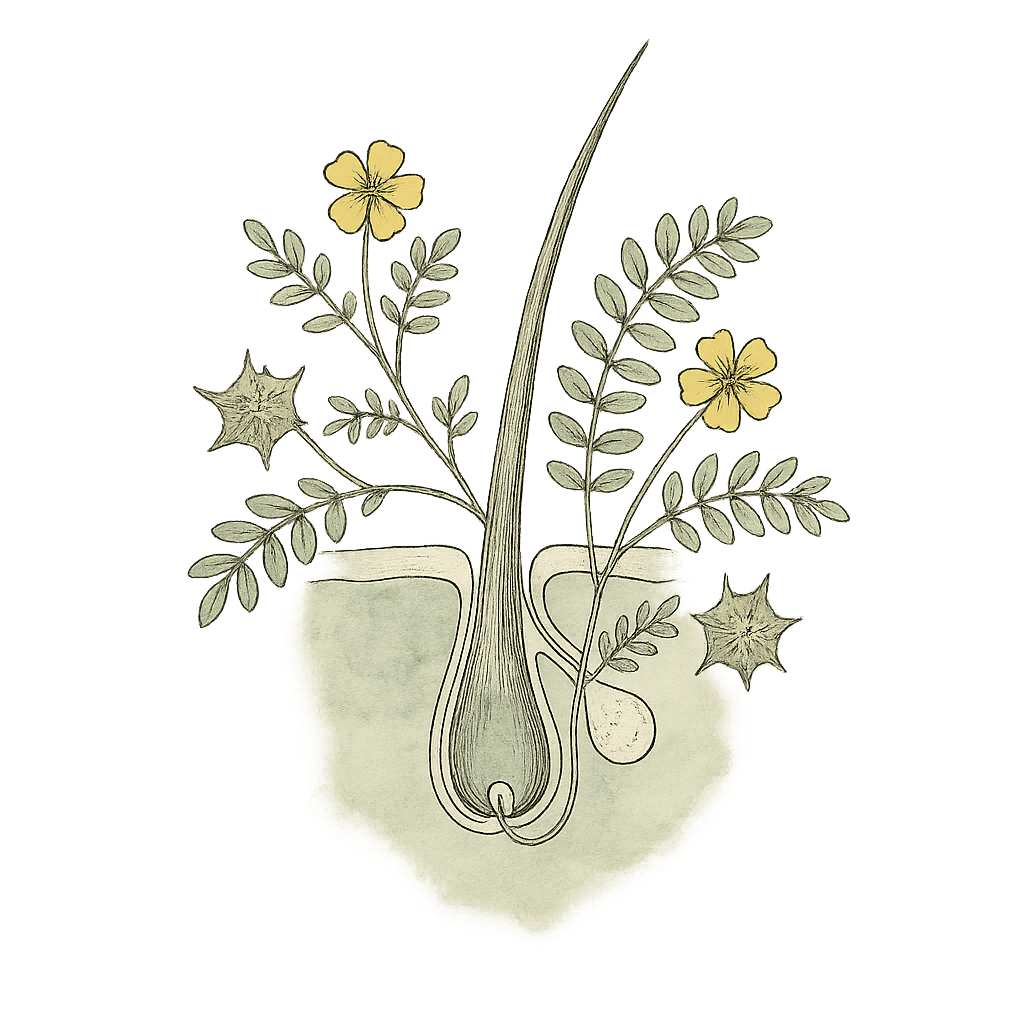
DHTDoes Tribulus terrestris support dihydrotestosterone (DHT)?
Evidence from 9 studies
What the research shows
These studies suggest that Tribulus terrestris increases dihydrotestosterone (DHT) levels.
View the top studies
Journal of the American College of Nutrition | Gregory A. Brown et al. | 76 | 2001
Randomized Control Trial (RCT) , Highly Cited
Supplement increased serum androstenedione (174%), free testosterone (37%), DHT (57%), and estradiol (86%)
Phytomedicine : international journal of phytotherapy and phytopharmacology | K. Gauthaman et al. | 251 | 2008
Animal Trial , Highly Cited
Tribulus terrestris increases DHT levels in primates, rabbits, and rats.
Andrologia | R. Salgado et al. | 43 | 2017
Non-Randomized Control Trial
Tribulus terrestris extract significantly increases dihydrotestosterone levels in infertile men.
International Journal of Environmental Research and Public Health | citations·Diego Fernández-Lázaro et al. | 12 | 2022
Rigorous Journal , Systematic Review , N/A
Tribulus terrestris L. supplementation showed moderate beneficial effects on lipid profile, but no clear evidence of beneficial effects on muscle damage markers or hormonal behavior in physically active adult males.
 Oxidation
Can Tribulus terrestris reduce oxidative stress?
Evidence from 19 studies

What the research shows
Tribulus terrestris exhibits significant antioxidant properties, reducing oxidative stress in various tissues and conditions. Its ability to modulate oxidative stress markers and enhance antioxidant enzyme activity suggests its potential as a natural supportive agent for oxidative stress-related wellness.
View the top studies
Journal of Dietary Supplements | Leila Ataei et al. | 2 | 2022
Randomized Control Trial (RCT)
Tribulus terrestris supplementation effectively attenuates oxidative stress responses to acute aerobic exercise, but does not improve delayed-onset muscle soreness markers.
Indian Journal of Nephrology | P. Kamboj et al. | 53 | 2011
Randomized Control Trial (RCT) , Animal Trial
Tribulus terrestris treatment reduced hyperoxaluria-induced oxidative stress and restored antioxidant enzyme activity in kidney tissue.
Diabetology | Rasha A. Al-Eisa et al. | 2 | 2022
Randomized Control Trial (RCT) , Animal Trial
Tribulus terrestris extract improves oxidative stress and histological architecture of the hepatocytes caused by hyperglycemia in diabetic rats.
Oxidative Medicine and Cellular Longevity | Zhen-Yi Yuan et al. | 25 | 2020
In Vitro Trial , Rigorous Journal
Tribulus terrestris has significant antioxidant effects on oxidative stressed ARPE-19 cells through regulating the PI3K/Akt-Nrf2 signaling pathway.
 Inflammation
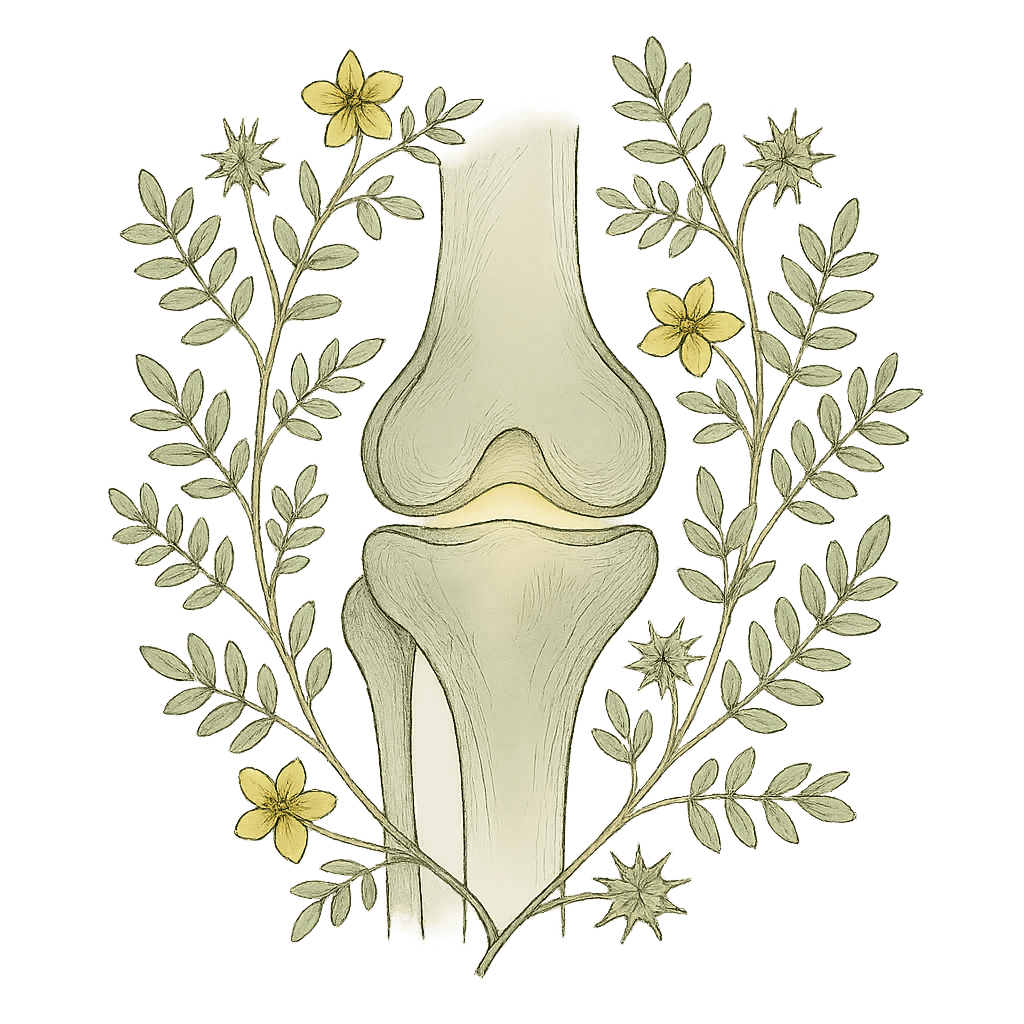
Does Tribulus terrestris reduce inflammation?
Evidence from 18 studies
What the research shows
Tribulus terrestris demonstrates significant anti-inflammatory properties, primarily through its saponin content, which inhibits key inflammatory pathways and reduces cytokine levels. These effects are supported by both in vitro and in vivo studies, highlighting its potential as a therapeutic agent for inflammatory conditions.
View the top studies
Biomedicine & pharmacotherapy | Yousra Abdel-mottaleb et al. | 12 | 2022
Randomized Control Trial (RCT) , Animal Trial , Rigorous Journal
Tribulus terrestris saponins (TTS) alleviate systemic inflammation and insulin resistance in dietary obese female rats.
Pharmaceutical Biology | Min Qiu et al. | 18 | 2019
Randomized Control Trial (RCT) , Animal Trial , Rigorous Journal
TED from Tribulus terrestris can inhibit bleomycin-induced inflammation and fibrosis in the lungs of mice.
Environmental Science and Pollution Research | Omnia E. Kilany et al. | 11 | 2020
Animal Trial
Tribulus terrestris effectively alleviates hepatic oxidative damage, apoptosis, and inflammation induced by acute carbon tetrachloride intoxication.
Journal of ethnopharmacology | Chunlian Tian et al. | 12 | 2021
In Vitro Trial , Controlled experimental study
Tribulus terrestris leaves saponins have strong anti-inflammatory effects and may be important anti-inflammatory drugs in clinic.
 Libido
Does Tribulus terrestris improve sexual health?
Evidence from 14 studies
What the research shows
Tribulus terrestris may offer some benefits for sexual health, particularly in improving erectile function and sexual desire in men and enhancing sexual function in women. However, its effects on testosterone levels are inconsistent, and more research is needed to fully understand its mechanisms and efficacy.
View the top studies
Maturitas | Z. Kamenov et al. | 67 | 2015
Randomized Control Trial (RCT)
Tribulus terrestris significantly improves sexual function and is well tolerated for men with mild to moderate erectile dysfunction.
Phytomedicine : international journal of phytotherapy and phytopharmacology | A. Ghanbari et al. | 7 | 2021
Rigorous Journal , Systematic Review
Tribulus terrestris improves ovary and uterus health, enhances sexual desire, and improves ovarian and breast cancers due to the presence of protodioscin, a steroidal saponin compound.
Journal of alternative and complementary medicine | K. Gauthaman et al. | 155 | 2003
Randomized Control Trial (RCT) , Animal Trial , Highly Cited
Tribulus terrestris extract (protodioscin) improves sexual behavior parameters and increases intralavernous pressure in rats.
Physiological research | A. V. Sirotkin et al. | 9 | 2021
Literature Review
Tribulus terrestris can improve sperm quality, libido, and fecundity, and is used for treating infertility.
Reviewed by Experts
Every research snapshot is checked by our independent Scientific Advisory Board: physicians, botanists and pharmacology researchers who verify the evidence grading and its interpretation.
Kerry Hughes
M.Sc., RH(AHG), FDN-P
Ethnobotanist & herbalist; Berkeley Herbal Center; principal at EthnoPharm.
View full profile →Lance Dreher
PhD, Nutritional Counseling
Performance nutrition & conditioning; four decades of applied training science.
View full profile →Dr. Lindsey Faucette
DO, FAAFP
Board-certified in Family & Integrative Medicine; Touro University College of Osteopathic Medicine.
View full profile →Francisco Chacon
PhD, Plant Biology
Botanical natural products & phytochemistry researcher, Penn State University.
View full profile →Meet the full Scientific Advisory Board →
How We Grade Consensus
For each benefit we retrieve the relevant peer-reviewed literature and classify every study by whether its findings support (Yes), partially or conditionally support (Possibly), or do not support (No) the claim. The donut shows the share of studies in each category; N is the number of studies analyzed for that benefit.
Grades reflect the weight and direction of the current evidence, not a guarantee of outcome, and the interpretation is verified by the Scientific Advisory Board.