
Kanna | How Sceletium tortuosum Can Lift Your Mood And Lower Stress

 Add us as a preferred source on Google
An Ancient Bringer Of Joy & Strength
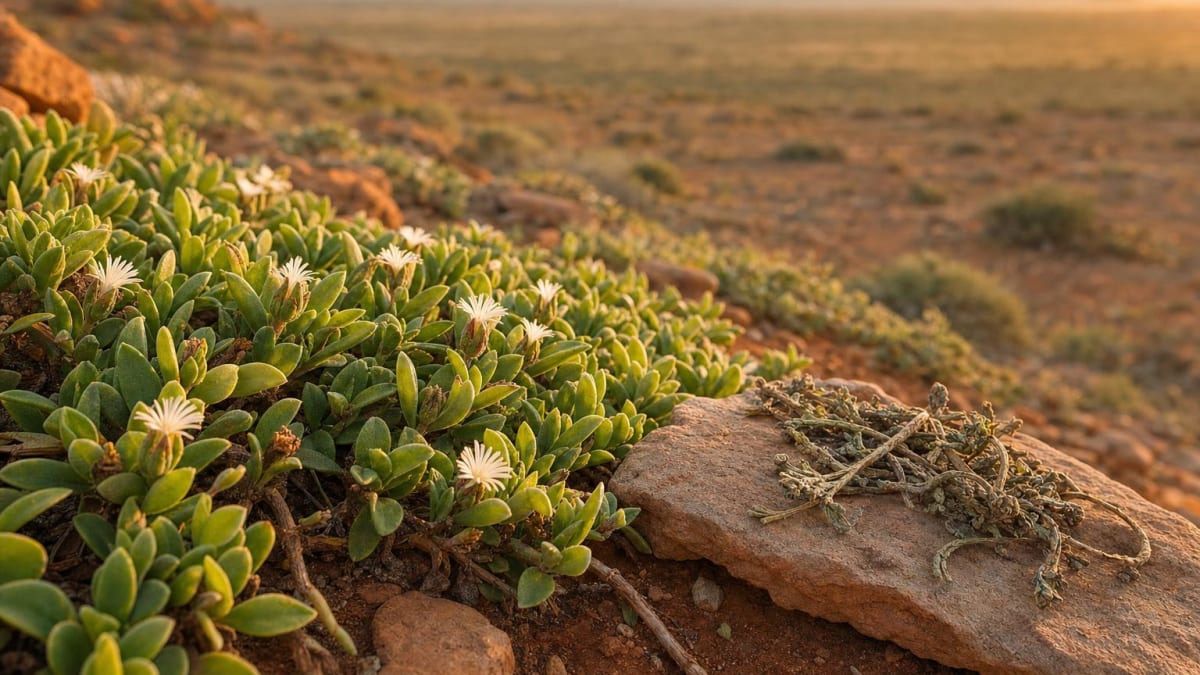
Sceletium tortuosum, more commonly known as kanna, is a very unique succulent that is native to South Africa. In South Africa, this succulent has been used for hundreds, perhaps even thousands of years. In fact, one of the oldest tribes on the planet, the KhoiSan (a catch all term for KhoiKhoi and San people) are fervent users of kanna. The name kanna even comes from the KhoiSan people. In their language, the word ‘kanna’ refers to one of the largest antelope species in the world, Taurotragus oryx Pallas, and also to Sceletium tortuosum. This species of antelope has major spiritual significance to the KhoiSan people, and is prominently featured in KhoiSan cave paintings which can be 20,000+ years old. Sceletium tortuosum also has major spiritual significance to the KhoiSan people, and early reports of explorers from the 1600’s illustrate very widespread consumption of kanna in South Africa. The main area in which wild kanna is found, is even named kannaland! Adding all of these facts up, it seems entirely possible that kanna has been used for thousands of years by ancient tribes. Traditionally, kanna is used for a wide variety of applications. Clearly, kanna plays a major role in spiritual practices and it is also used for its wide variety of health benefits in traditional practices. What’s especially unique about kanna though, is that it seems to be predominantly used for enjoyment. Traditionally, the whole kanna succulent is harvested and crushed with rocks.
The crushed kanna plants are then placed in a sealable vessel in order to ferment it. After the kanna has fermented for about a week, the fermented kanna is either chewed right away which appears to produce the most potent effects, or it is dried in the sun and then further crushed up into a powder. Since kanna is often chewed it is also sometimes referred to as “kauwgoed” which translates to “stuff to chew”.
Various explorers have also documented that large amounts of kanna would be chewed during dancing ceremonies. Individuals using kanna would gradually become energized with their spirits lifted, upon which hours of dancing can commence. Inspired by this traditional use, I (Emiel, author of this blog and product specialist) have consumed kanna numerous times at various concerts and I have to admit that kanna can really enhance musical enjoyment, and dancing on kanna feels fantastic! Part of the reason why dancing can feel great on kanna is because it does a great job of enhancing physical energy. In fact, kanna seems to have also been used extensively by hunters who needed the physical and mental stamina to complete long hunts. One of the first times I personally tried kanna, which is now well over a decade ago, was actually on a 100 km + bike ride and I found that it did a great job of staving off some fatigue at the end of the ride. Recently, we have also seen an anecdote pop up on reddit which indicates that our kanna is performing really well as a pre-workout ingredient!
The Magic Behind Kanna
All of these unique effects for which kanna has perhaps been utilized for thousands of years already, are being produced by the alkaloids it contains. Over the years, there have been major debates about which alkaloids are most important for the effects of kanna. One of the leading modern theories is that mesembrine is one of the most important alkaloids for the mood boosting properties of kanna. It is easy to see why this theory has gained traction over the years, because mesembrine has a very interesting pharmacodynamic profile! One of the most unique effects of mesembrine is that it upregulates the vesicular monoamine amine transporter 2 (VMAT-2). VMAT-2 is present in our presynaptic neurons, and is responsible for packaging monoamine neurotransmitters, such as serotonin and dopamine, into vesicles. These vesicles can then fuse to the cell membrane of the presynaptic neuron, after which the vesicles open up and release their contents into the synaptic cleft. The released neurotransmitters can now act on their corresponding receptor which is located on the postsynaptic neuron. By upregulating VMAT-2, more monoamine neurotransmitters can be packaged into vesicles at a higher rate. Eventually, this will then lead to the release of higher quantities of these monoamine neurotransmitters. There are not a whole lot of botanical derived compounds which have this effect at VMAT-2, and due to this, mesembrine is clearly a very important driver of the effects of kanna. That all being said, our bioassaying trials have revealed to us that the story is much more complex!
During our kanna beta-testing, we tried a few extracts which contained very high amounts of mesembrine while being very low in the other alkaloids. This gave us the perfect opportunity to try out mesembrine in semi-isolation. To our surprise, we collectively were not huge fans of these high mesembrine extracts. Yes, they produced the classic stimulating effects of kanna, yet the effects were a bit too racy and made many of us feel on edge. In our opinion, there was clearly something missing in these extracts.
Moving into the opposite direction, we found that extracts which had increasingly higher Δ7-mesembrenone content felt much more pleasant. This really fascinated us because there is some data indicating that fermentation of kanna can convert mesembrine into Δ7-mesembrenone! According to the KhoiSan, kanna must be fermented in order for it to have ‘power’. We also found that kanna extracts that had both high mesembrine and high Δ7-mesembrenone content, felt more powerful, even moreso than extracts which practically only contained mesembrine. It’s currently unknown what exactly Δ7-mesembrenone does, but during our research and development phase, we identified Δ7-mesembrenone as being a very important bioactive for the kanna effects profile we were going for.
The other alkaloids in kanna produce a very complex blend of effects, from PDE-4 inhibition to serotonin transporter inhibition. In fact, a number of kanna alkaloids, including mesembrine, act as serotonin transporter inhibitors. This serotonin transporter inhibition mechanism is very important in the context of the VMAT-2 mechanism of mesembrine. Mesembrine can lead to the release of various different monoamine neurotransmitters, including serotonin, dopamine and norepinephrine.
This is also why kanna extracts which are high in mesembrine are stimulating. However, kanna is most commonly viewed as a serotonergic botanical and the effects profile certainly reflects this too. This is likely due to the unique interplay between the VMAT-2 mediated serotonin release, coupled with serotonin transporter inhibition.
This means that more of the serotonin that is released into the synaptic cleft via VMAT-2 upregulation is staying around for longer because less serotonin is being transported out of the synaptic cleft due to the serotonin transporter inhibition that kanna produces. This shifts the overall effects profile of kanna more towards the serotonergic side of the spectrum which produces a more mood boosting and warmer effects profile.
A Note On Priming
There is a commonly held belief within kanna communities that the full power of this succulent only reveals itself upon frequent dosing. We noticed this ourselves too when we first started beta-testing kanna. A lot of the kanna extracts we initially tried were very lacklustre, and it took us many weeks until we actually tried our first dose of the kanna extract we eventually ended up going with. This meant that we had plenty of ‘priming’ before trying our current kanna extract, and we were very impressed with its effects.
Going back to the extracts that felt lacklustre initially, now felt a lot more potent too. However, those initial extracts still were not as interesting and potent as the kanna extract we ended up going with. Various redditors have now also mentioned that they seem to experience a ‘priming’ effect with our kanna too. One redditor in particular has been posting frequent updates, and the first few doses were a big let down for them, but after a few days the kanna has really started to grow on them and they are now reporting excellent effects with it. This phenomenon has really started to interest us, and we’ve been trying to figure out why it happens. There are plenty of anecdotes of kanna needing to be primed floating around online, but there doesn’t seem to be an agreed upon mechanism as to why this is necessary. We think that we have perhaps figured out one of the reasons why priming works!
A lot of the interesting effects of kanna appear to be mediated through an upregulation in VMAT-2 levels. Since upregulation often takes a bit of time, it seems logical that upregulating the levels of a transporter like VMAT-2 will take a few days, rather than a few minutes or hours. The higher the levels of VMAT-2, the more monoamine neurotransmitters can be packaged into vesicles, thus over time the monoamine neurotransmitter release produced via mesembrine’s VMAT-2 mechanism should keep getting stronger with more frequent dosing. This is perhaps also why we have found that the strongest effects with our kanna can be achieved by letting half a tablet (25 mg) dissolve in our mouth about every 30 minutes. The first 25 mg dose may help prime through a VMAT-2 mechanism, which then means that the second 25 mg dose has a more pronounced effect. The lower initial dose also means that the effects come on more smoothly, which we have found helps us settle into the effects of kanna.
With this priming mechanism in mind, it could make sense to take very low doses of our kanna for a few days before jumping into higher doses. For example, you could take a quarter tablet of our kanna (12.5 mg) for four days. This may be just the right amount of kanna to prime yourself with, meaning that subsequent full doses will have a more pronounced impact. The jury is still out on what exactly is producing this potential priming effect, but it seems that there is certainly some truth to it!
A Note On Bioactive Diversity
In an attempt to make sense of the world, we often try to simplify complex things. This can help us understand the world, but it can also have the nasty side effect of making us a little bit myopic. We believe that this has certainly become the case with many botanicals, including kanna. The quest for more modern and potent extracts has led to a highly increased focus on mesembrine. This is clear when looking at the countless amount of ultra high mesembrine kanna extracts that are currently on offer. The weird thing with this mesembrine focus, is that we are drifting further and further away from the traditional use of high potency, non-extracted, and fermented kanna. Many individuals will claim that only high mesembrine extracts will work well, but just tell that to the KhoiSan people who seem to enter deep trance states during dancing ceremonies on non-extracted fermented kanna. When considering that 37 alkaloids have already been identified in kanna, and we are still nowhere near to figuring out kanna’s complete phytochemical profile, it seems a bit silly to put so much stock in a single alkaloid!
It especially seems silly to us to only focus on mesembrine, when most of the ultra high mesembrine extracts actually don’t feel that pleasant when compared to more full spectrum extracts. A lot of research still needs to be done on kanna, but we believe that in the long run we’ll realize that there is a whole lot more to kanna than mesembrine! For example, a recent research focus on kanna is on its potential PDE-5 inhibitor potential, which could be mediated through Δ7-mesembrenone. Based on our experiences with higher Δ7-mesembrenone extracts like our own kanna, there definitely seems to be an uptick in vasodilation!
We believe that we have a lot more to learn about kanna from a scientific perspective, and that for now, looking for bioactive diversity within kanna rather than focusing on specific isolates, is the way to go!
When To Dose Kanna
Since there are so many different kanna products out there these days with drastically different potency levels and bioactive diversity, the advice for when to take kanna seems to be all over the place. In some instances, it is recommended to take kanna in the evening to help wind down and relax. On the flipside, it is also often recommended to take kanna as a way to stave off fatigue. There are undoubtedly some lower potency kanna products out there that can be very relaxing. In fact, kanna was traditionally also often used to enhance sleep in lower doses. More often than not though, with today's increasingly high potency kanna extracts, we are starting to lose sight of these relaxing effects. Most kanna extracts are quite stimulating, and can produce enough wakefulness to keep you up at night if you dose kanna too late.
Our kanna definitely leans towards the stimulating side, even though it produces a sense of relaxation too. However, it certainly produces enough wakefulness enhancing effects that it will certainly keep you up at night if you dose it too close to bedtime. With this in mind, we would recommend dosing kanna earlier in the day, or in the very early evening as a pick me up!
Stacking With Kanna
As is the case with many powerful botanicals, it can be a little bit tricky to stack with kanna. This is due to the fact that kanna draws a lot of attention to itself and thus can override the more nuanced effects of many complimentary botanicals. The second issue to stacking with kanna can be its duration of action, which is on the shorter side.
This is further complicated by the fact that the effects of kanna ramp up very rapidly, and thus it can be hard to time a kanna stack. We’ve been doing a ton of testing with kanna stacks though, and below are some of our current favorite kanna stacks.
Kanna + Supercritical Coriander
Balanced Kanna Stack
For some, the stimulating effects of kanna can be a little bit overwhelming. To balance our kanna out, we have found that combining it with our supercritical coriander extract takes the slightly rough edges off of kanna, while further enhancing the kanna mood boost! This is a perfect stack for chilling out with.
Kanna + Mushroom Magic Matcha

Extra Stimulating Kanna Stack
If instead you actually want to up the stimulation of our kanna a bit, we have found that it stacks really well with our Mushroom Magic Matcha. The reason for this, is that the effects of Mushroom Magic Matcha kick in pretty rapidly due to it being in a beverage form, and the mood boosting properties of the mushrooms synergize nicely with the mood boosting effects of kanna.
The way in which we recommend using this stack, is to first drink a serving of Mushroom Magic Matcha. After you have finished the beverage, let half a tablet of kanna (25 mg) dissolve in your mouth. After 30 minutes, let the other half of the kanna tablet dissolve in your mouth.
Kanna + Maca + Kava + Cognance
Sensory Enhancement Kanna Stack*
The effects of kanna go well with compounds that act on the endocannabinoid system, and due to this, it stacks quite nicely with the FAAH inhibitor and CB1 agonist effects of maca. These endocannabinoid effects are further rounded out by kava, which also acts on the CB1 receptor. Last but not least, this sensory enhancement stack is rounded out with a dose of cognance who’s 5-HT2A modulator effects synergize very nicely with the serotonergic effects of kanna!
Our advice for taking this stack is as follows. First take the kava, maca and cognance. Give these 30 minutes to start taking effect. At around the 30 minute mark, you should feel the initial tingle of kava, maca and cognance. At this point, let half a tablet of kanna (25 mg) dissolve in your mouth. After 30 minutes, let the other half of the kanna tablet dissolve in your mouth. After the second half of the tablet has dissolved, all of the components of this stack will be at peak effects, which results in a unique synergistic effects profile!
*These statements have not been evaluated by the Food and Drug Administration. This product is not intended to diagnose, treat, cure, or prevent any disease.