
Research Snapshot
Mucuna Pruriens
A synthesis of the peer-reviewed evidence for Mucuna Pruriens across neuroprotection, mood, testosterone and oxidation, graded by scientific consensus and reviewed by our Scientific Advisory Board.
See the Research
 Neuroprotection
Does Mucuna pruriens (L-DOPA) support neuroprotection?
Evidence from 12 studies
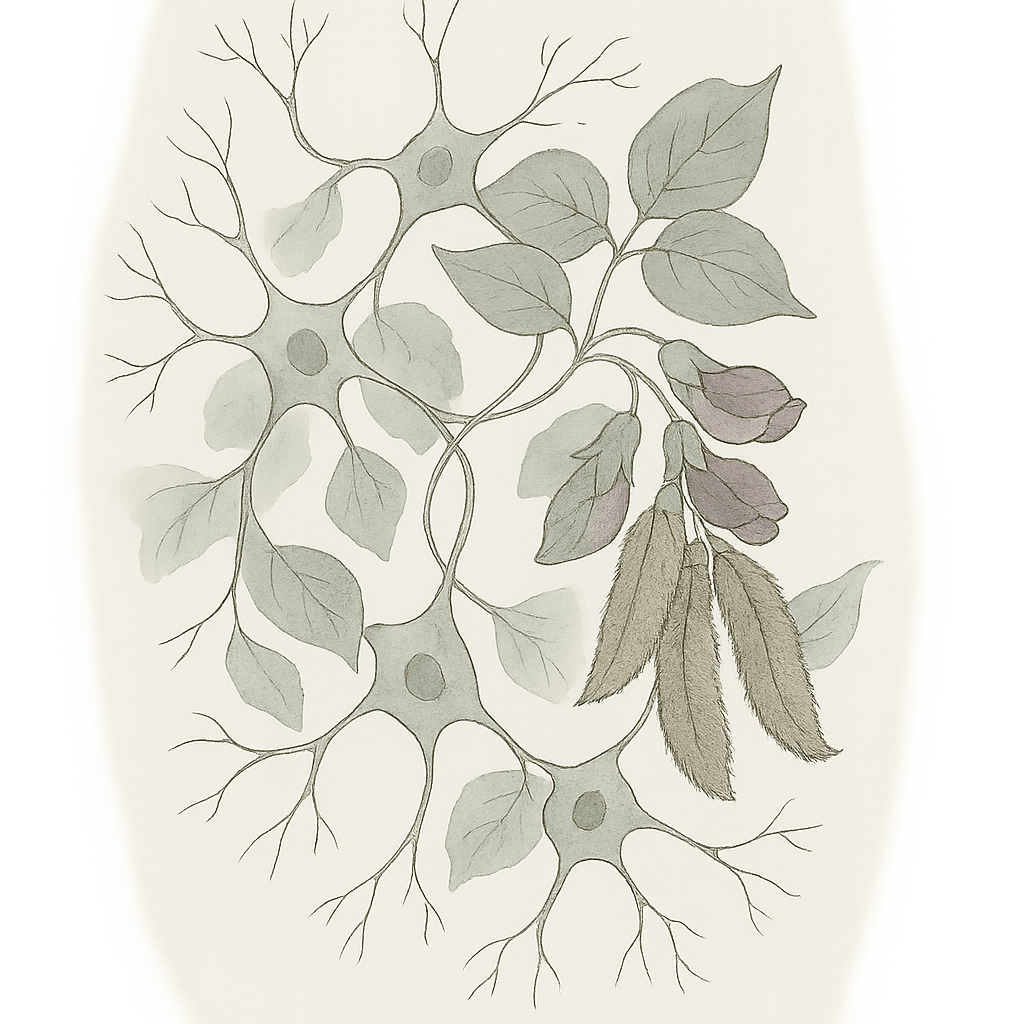
What the research shows
Current research supports the neuroprotective potential of Mucuna pruriens (L-DOPA), with benefits likely arising from both L-DOPA and additional phytochemicals. While preclinical evidence is strong, more clinical trials are needed to confirm these effects and clarify safety in humans.
View the top studies
Journal of Neurology, Neurosurgery, and Psychiatry | R Katzenschlager et al. | 513 | 2004
Randomized Control Trial , Double Blind Study , Rigorous Journal , Highly Cited
This randomized, controlled, double-blind crossover trial compared Mucuna pruriens seed powder preparation to standard L-dopa/carbidopa in Parkinson's patients, measuring symptom control, dyskinesias, and pharmacokinetics. The Mucuna preparation led to faster onset and longer duration of symptom improvement with no significant increase in dyskinesias, suggesting potential advantages for long-term management.
Phytotherapy Research | Bala V Manyam et al. | 284 | 2004
Animal Trial , Controlled experimental study , Rigorous Journal , Highly Cited
This study investigated the neurorestorative effect of Mucuna pruriens cotyledon powder in a 6-OHDA lesioned rat model of Parkinson's disease. Mucuna pruriens restored endogenous dopamine, norepinephrine, and serotonin levels, increased mitochondrial complex-I activity, and contained neuroprotective compounds NADH and coenzyme Q-10.
Molecules | N Kamkaen et al. | 30 | 2022
In Vitro Trial , Rigorous Journal , Controlled experimental study
This in vitro study compared neuroprotective effects and acetylcholinesterase inhibitory activities of Mucuna pruriens seed extract to synthetic L-dopa. The extract showed significant neuroprotection and less stimulation of acetylcholinesterase activity relative to L-dopa, supporting its benefit in neurodegenerative disorders.
Phytotherapy Research | SL Johnson et al. | 72 | 2018
In Vitro Trial , In Vivo Experiment , Rigorous Journal , Controlled experimental study
This study investigated a Mucuna pruriens seed extract with negligible L-dopa content, assessing neuroprotective potential in cell cultures, nematodes, and fruit flies. Significant protective effects against oxidative and neurotoxic stressors were observed, suggesting that non-L-dopa constituents also contribute to neuroprotection.
 Mood
MoodDoes Mucuna pruriens (L-DOPA) offer dopaminergic support?
Evidence from 8 studies
What the research shows
Mucuna pruriens is a well-established natural source of L-DOPA, offering significant dopaminergic support and potential advantages over synthetic L-DOPA, including additional neuroprotective effects and improved safety. However, further research is needed to optimize dosing and long-term use.
View the top studies
Brain Sciences | A Mata-Bermudez et al. | 6 | 2024
Literature Review , Animal Trial , Rigorous Journal , Highly Cited
This paper reviews preclinical evidence on the antidepressant potential of Mucuna pruriens and L-Dopa, highlighting studies showing attenuation of depressive-like behavior in animal models and suggesting that dopaminergic modulation is a primary mechanism.
Indian Journal of Pharmacology | DG Rana et al. | 36 | 2014
Animal Trial , Controlled experimental study , Rigorous Journal , Highly Cited
This research assessed the antidepressant effects of Mucuna pruriens seed extract using standard models of depression and pharmacological probes, demonstrating significant reduction of depressive behavior via dopaminergic mechanisms.
Parkinson's Disease (Hindawi) | Sandra Fernández-Calle et al. | 2 | 2023
Systematic Review , Human Trial , Rigorous Journal
This systematic review synthesizes clinical and preclinical studies on Mucuna pruriens treatment for Parkinson’s disease, highlighting not only motor symptom improvements, but also potential alleviation of non-motor symptoms such as depression due to restoration of dopaminergic function.
Phytotherapy Research | Stefano Colzi et al. | 8 | 2020
Randomized Control Trial (RCT) , Human Trial , Rigorous Journal
This randomized, open-label clinical trial evaluated the effects of chronic Mucuna pruriens administration in Parkinson’s patients, reporting improvements in mood and quality-of-life metrics along with dopaminergic symptom relief.
 Testosterone
Does Mucuna pruriens (L-DOPA) support healthy testosterone levels?
Evidence from 5 studies
What the research shows
Current research supports the use of Mucuna pruriens (L-DOPA) to increase testosterone levels and improve male reproductive health, particularly in men with infertility or under physiological stress. However, most robust evidence comes from animal studies and men with existing reproductive issues; effects in healthy men are less well-studied.
View the top studies
The Journal of Sexual Medicine | Suresh Sekar et al. | 118 | 2010
Controlled experimental study , Animal Trial , Highly Cited , Rigorous Journal
This study evaluated the efficacy of Mucuna pruriens seed extract in improving male sexual behavior and reproductive parameters in long-term hyperglycemic (diabetic) male rats. The extract significantly enhanced libido, sexual performance, daily sperm production, and androgen (testosterone) levels compared to diabetic controls, supporting its use as an aphrodisiac and fertility enhancer in diabetes-induced sexual dysfunction.
Exploration of Endocrine and Fatigue | R Verma et al. | 1 | 2025
Meta Analysis , Systematic Review , Literature Review , Rigorous Journal
This comprehensive review and meta-analysis of clinical and preclinical studies highlights that Mucuna pruriens and its L-DOPA content positively affect libido and testosterone levels, with evidence from various human and animal trials. The review details the biological mechanisms linking dopamine increase, nitric oxide signaling, reduced inflammation, and improved sexual/reproductive health outcomes.
Journal of Advanced Zoology | Ayan Sengupta et al. | 0 | 2024
Literature Review , Human Trial , Cited in Literature Reviews
Mucuna pruriens seed powder effectively improves sperm count and motility in infertile men, while also enhancing sexual desire and improving conjugal relationships.
The Journal of Sexual Medicine | Suresh Sekar et al. | 118 | 2012
Animal Trial , Controlled experimental study , Highly Cited , Rigorous Journal
Experimental study assessing the effects of Mucuna pruriens seed extract on sexual and reproductive health in diabetic rats found strong improvements in libido, mating behavior, sperm metrics, and testosterone after treatment compared to diabetic controls. Results reaffirm traditional claims and support androgenic efficacy.
 Oxidation
Does Mucuna pruriens help counteract oxidative stress?
Evidence from 12 studies

What the research shows
Current research consistently shows that Mucuna pruriens possesses significant antioxidant properties, helping to counteract oxidative stress in animal, cellular, and in vitro models. These effects are observed across multiple tissues and research models, supporting its traditional use as a protective agent against oxidative damage.
View the top studies
Food and chemical toxicology | R. Ulu et al. | 18 | 2018
Randomized Control Trial (RCT) , Animal Trial
Mucuna pruriens supplementation reduces oxidative stress and kidney nuclear transcription factors in high-fructose-fed rats.
International journal of andrology | S. Suresh et al. | 71 | 2010
Animal Trial , Highly Cited , Controlled experimental study
Mucuna pruriens significantly reduces oxidative stress-induced damage in aged rat sperm by quenching ROS, improving antioxidant defense system, and mitochondrial function.
The journal of sexual medicine | S. Suresh et al. | 34 | 2011
Randomized Control Trial (RCT) , Animal Trial
Mucuna pruriens seed extract significantly recovered or protected erectile tissue from oxidative stress-induced degeneration.
South African Journal of Botany | D. Sruthi et al. | 2 | 2023
In Vitro Trial , Controlled experimental study
Mucuna pruriens water extract shows promising protective effects against oxidative stress in HEK 293T cells and breast cancer cells.
Reviewed by Experts
Every research snapshot is checked by our independent Scientific Advisory Board: physicians, botanists and pharmacology researchers who verify the evidence grading and its interpretation.
Kerry Hughes
M.Sc., RH(AHG), FDN-P
Ethnobotanist & herbalist; Berkeley Herbal Center; principal at EthnoPharm.
View full profile →Lance Dreher
PhD, Nutritional Counseling
Performance nutrition & conditioning; four decades of applied training science.
View full profile →Dr. Lindsey Faucette
DO, FAAFP
Board-certified in Family & Integrative Medicine; Touro University College of Osteopathic Medicine.
View full profile →Francisco Chacon
PhD, Plant Biology
Botanical natural products & phytochemistry researcher, Penn State University.
View full profile →Meet the full Scientific Advisory Board →
How We Grade Consensus
For each benefit we retrieve the relevant peer-reviewed literature and classify every study by whether its findings support (Yes), partially or conditionally support (Possibly), or do not support (No) the claim. The donut shows the share of studies in each category; N is the number of studies analyzed for that benefit.
Grades reflect the weight and direction of the current evidence, not a guarantee of outcome, and the interpretation is verified by the Scientific Advisory Board.