
Research Snapshot
Pregnenolone
A synthesis of the peer-reviewed evidence for Pregnenolone across inflammation, cognition, mood and memory, graded by scientific consensus and reviewed by our Scientific Advisory Board.
See the Research
 Inflammation
Does pregnenolone have anti-inflammatory properties?
Evidence from 10 studies

What the research shows
Research strongly supports that pregnenolone inhibits pro-inflammatory signaling pathways, especially those involving TLR2/4 and NF-κB, through both direct and indirect mechanisms. This action underlies its potential as a supportive agent for inflammatory response and mental wellness.
View the top studies
Pharmaceuticals | M. Morsy et al. | 5 | 2023
Randomized Control Trial (RCT) , Animal Trial
Pregnenolone demonstrated anti-inflammatory and antioxidant activity in animal models.
European review for medical and pharmacological sciences | M. Morsy et al. | 2 | 2023
Randomized Control Trial (RCT) , Animal Trial
Pregnenolone protects the liver against doxorubicin-induced hepatotoxicity by anti-inflammatory, antioxidant, and antiapoptotic mechanisms.
The Journal of Biological Chemistry | Subathra Murugan et al. | 46 | 2019
In Vitro Trial
Pregnenolone promotes degradation of key proteins in innate immune signaling to suppress inflammation and maintain immune homeostasis in various inflammatory conditions.
Steroids | Xiaorui Cai et al. | 11 | 2021
In Vitro Trial
Pregnenolone-derived compounds showed significant anti-inflammatory activity, suggesting potential as a therapeutic anti-inflammatory drug candidate.
 Cognition
Does Pregnenolone have cognitive enhancing effects?
Evidence from 16 studies
What the research shows
Pregnenolone and its sulfate form support cognitive function, particularly in aging, human research, and metabolic impairment, with robust preclinical and emerging clinical evidence. Effects in healthy adults are less established and require further research.
View the top studies
Psychopharmacology | Conor C. Smith et al. | 0 | 2014
Very Rigorous Journal , Systematic Review
Pregnenolone sulfate (PregS) acts as a cognitive enhancer and modulator of neurotransmission, affecting excitatory N-methyl-D-aspartate receptor (NMDAR)-mediated synaptic transmission.
The Journal of clinical psychiatry | M. Ritsner et al. | 92 | 2010
Randomized Control Trial (RCT) , Highly Cited
Low-dose pregnenolone augmentation demonstrated significant improvement in attention and working memory performance of schizophrenia and schizoaffective disorder patients.
Proceedings of the National Academy of Sciences of the United States of America | J. Flood et al. | 439 | 1992
Non-Randomized Control Trial , Animal Trial , Highly Cited
Pregnenolone and its derivatives improve memory retention in male mice through the facilitation of transcription of immediate-early genes.
Neurobiology of Learning and Memory | Laila Abdel-Hafiz et al. | 7 | 2016
Non-Randomized Control Trial , Animal Trial
Intranasally applied pregnenolone (IN-PREG) has cognitive enhancing properties in rats, including memory-enhancing and resistance to extinction.
 Mood
MoodDoes Pregnenolone influence mood?
Evidence from 15 studies

What the research shows
Research consistently indicates that pregnenolone influences mood, with clinical and mechanistic evidence supporting its antidepressant and anxiolytic effects, particularly in supporting healthy mood and stress response. Further large-scale studies are warranted to clarify optimal dosing and long-term safety.
View the top studies
Neuropsychopharmacology | E. Brown et al. | 85 | 2014
Randomized Control Trial (RCT) , Very Rigorous Journal , Highly Cited
Pregnenolone may improve depressive symptoms in patients with bipolar disorder and can be safely administered.
Psychiatry Research | I. Osuji et al. | 33 | 2010
Randomized Control Trial (RCT) , Rigorous Journal
Pregnenolone use may be associated with some improvement in manic and depressive symptoms, but not cognition in depressed patients with a history of substance use.
Journal of affective disorders | Shivani Daftary et al. | 13 | 2017
Randomized Control Trial (RCT) , Rigorous Journal
Pregnenolone treatment is associated with a change in serum MAP2 levels, which correlates positively with changes in self-reported depressive symptom scores.
Behavioral and Brain Functions : BBF | M. Carta et al. | 65 | 2012
Literature Review
Pregnenolone derivative neurosteroids like allopregnanolone have significant mood-stabilizing effects and play a role in mood disorders.
 Memory
Does Pregnenolone support the processes that contribute to the building of memory?
Evidence from 16 studies
What the research shows
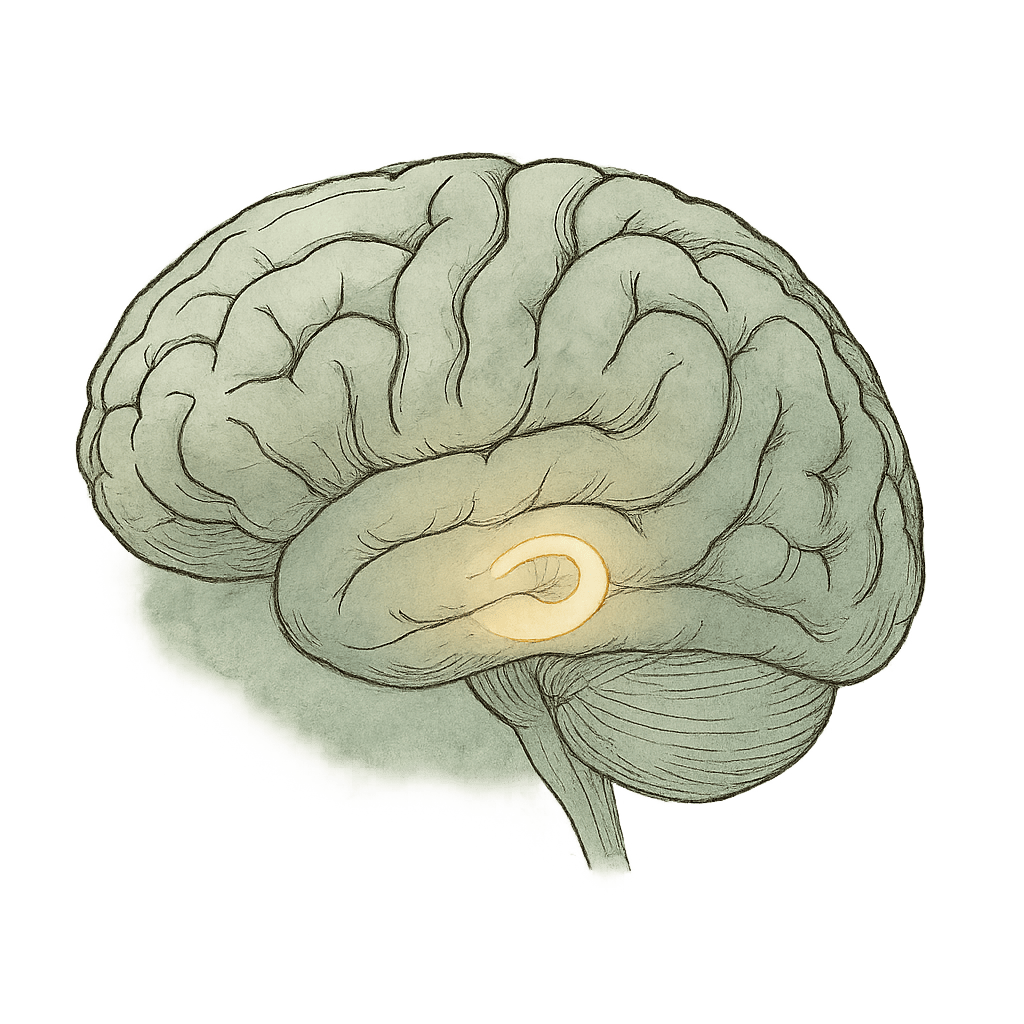
Pregnenolone, especially as pregnenolone sulfate, robustly supports processes essential for memory building in animal models by enhancing synaptic plasticity, neurotransmitter release, and neurogenesis. While animal data are strong, human evidence is less conclusive, highlighting the need for further clinical research.
View the top studies
Proceedings of the National Academy of Sciences of the United States of America | J. Flood et al. | 180 | 1995
Non-Randomized Control Trial , Animal Trial , Highly Cited
Pregnenolone sulfate enhances post-training memory processes when injected into the amygdala, making it the most potent memory enhancer yet reported.
Proceedings of the National Academy of Sciences of the United States of America | J. Flood et al. | 439 | 1992
Non-Randomized Control Trial , Animal Trial , Highly Cited
Pregnenolone and its derivatives improve memory retention in male mice through the facilitation of transcription of immediate-early genes.
Proceedings of the National Academy of Sciences | Monique Vallée et al. | 318 | 1997
Non-Randomized Control Trial , Animal Trial , Highly Cited
Pregnenolone sulfate levels in the hippocampus play a physiological role in preserving and/or enhancing cognitive abilities in aged rats, possibly via an interaction with central cholinergic systems.
Proceedings of the National Academy of Sciences of the United States of America | Y. Akwa et al. | 143 | 2001
Non-Randomized Control Trial , Animal Trial , Highly Cited
Pregnenolone sulfate (PREGS) supports memory function, with its synthetic enantiomer having a 10 times higher potency than the natural steroid.
Reviewed by Experts
Every research snapshot is checked by our independent Scientific Advisory Board: physicians, botanists and pharmacology researchers who verify the evidence grading and its interpretation.
Kerry Hughes
M.Sc., RH(AHG), FDN-P
Ethnobotanist & herbalist; Berkeley Herbal Center; principal at EthnoPharm.
View full profile →Lance Dreher
PhD, Nutritional Counseling
Performance nutrition & conditioning; four decades of applied training science.
View full profile →Dr. Lindsey Faucette
DO, FAAFP
Board-certified in Family & Integrative Medicine; Touro University College of Osteopathic Medicine.
View full profile →Francisco Chacon
PhD, Plant Biology
Botanical natural products & phytochemistry researcher, Penn State University.
View full profile →Meet the full Scientific Advisory Board →
How We Grade Consensus
For each benefit we retrieve the relevant peer-reviewed literature and classify every study by whether its findings support (Yes), partially or conditionally support (Possibly), or do not support (No) the claim. The donut shows the share of studies in each category; N is the number of studies analyzed for that benefit.
Grades reflect the weight and direction of the current evidence, not a guarantee of outcome, and the interpretation is verified by the Scientific Advisory Board.