SulfoMax | World's Highest Sulforaphane
Glucoraphanin-standardized black kale extract paired with myrosinase-rich white mustard seed to activate Nrf2, supporting redox balance, neuronal resilience and vascular function.




Glucoraphanin-standardized black kale extract paired with myrosinase-rich white mustard seed to activate Nrf2, supporting redox balance, neuronal resilience and vascular function.
- Highest Sulforaphane Measured
- Bypasses Stomach Enzyme Loss
- Activates Nrf2 Detox Pathway
- Steady Clarity And Focus Daily
3rd Party Lab Tested & Verified
Why ND SulfoMax?
Updated On: 10/07/2026
Benefits
When You'll Notice Effects
2-3 Weeks
-
 Oxidation
-
 Inflammation
-
 Cognition
-
 Longevity
How To Take
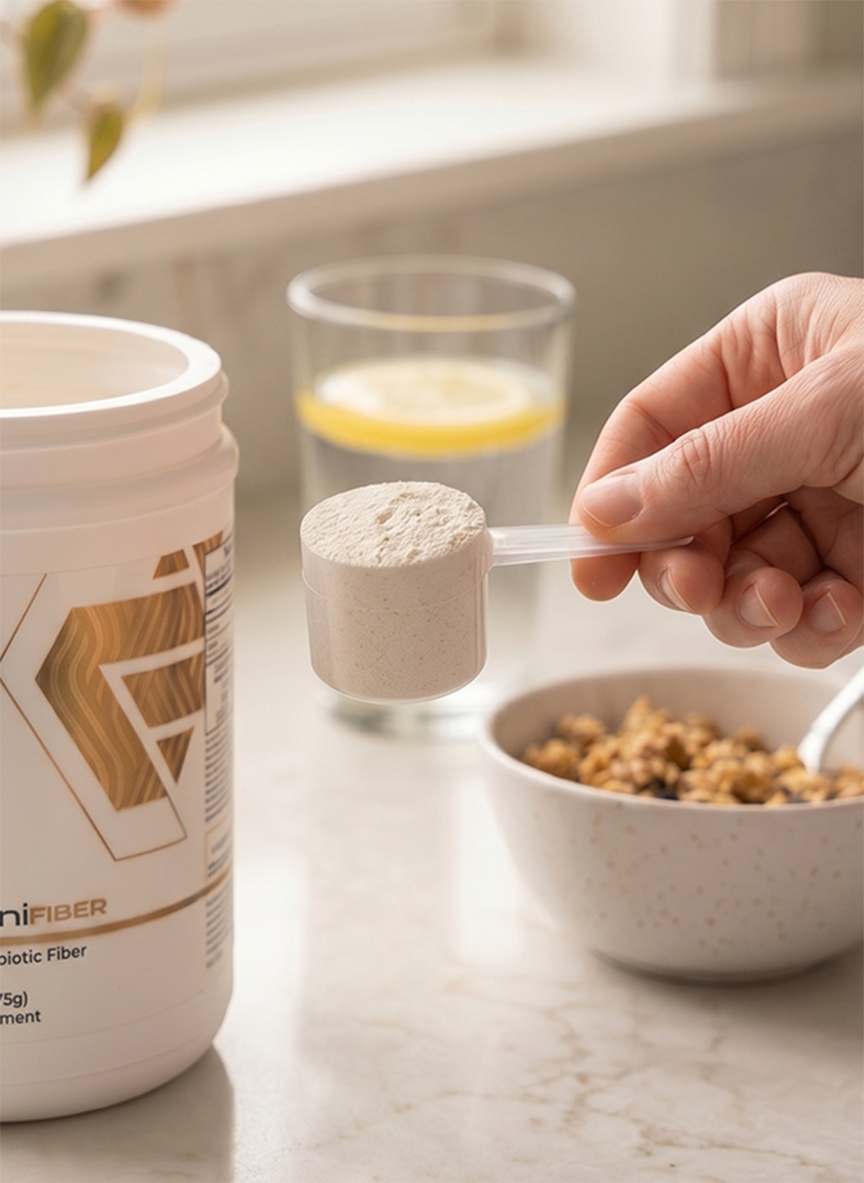
One Scoop

Flexible

With Food
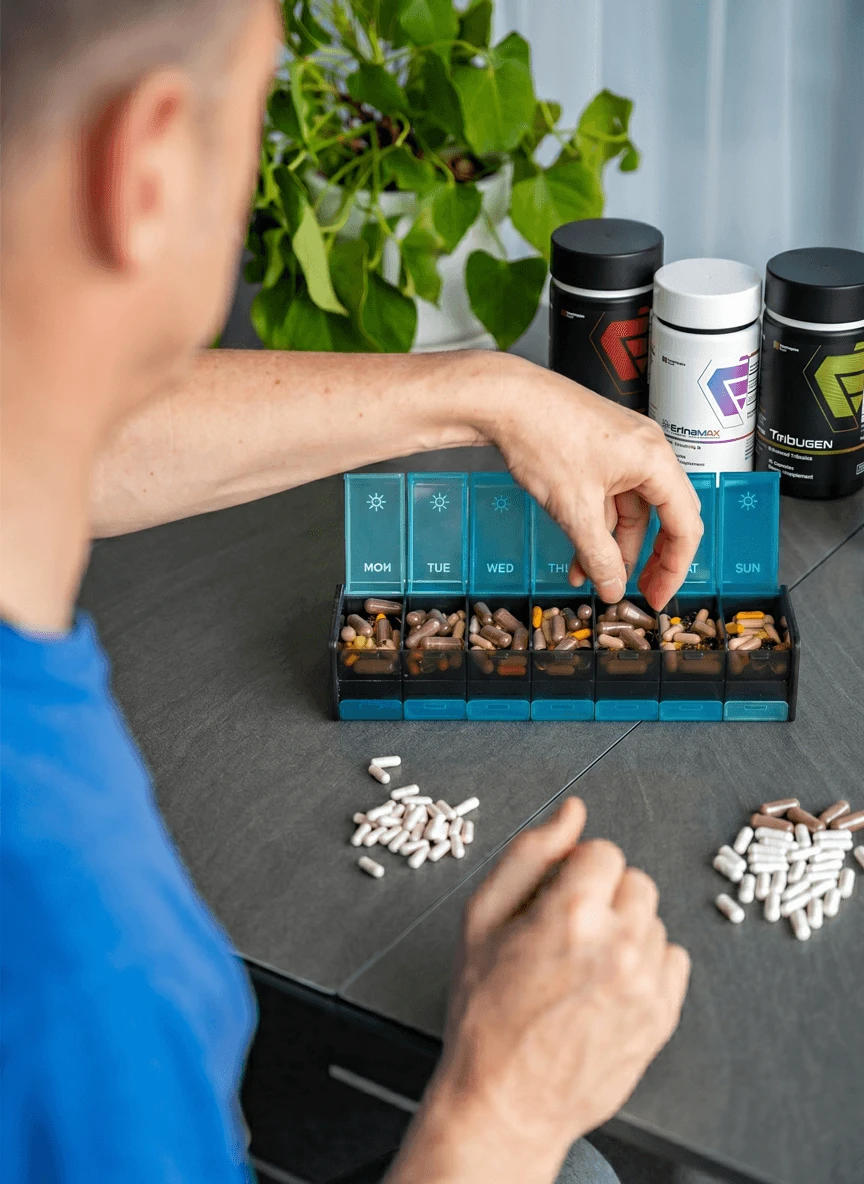
1 Time Daily


Talk to thousands of customers just like you.
Join our community on Reddit to ask questions, share experiences, and get the unfiltered truth from long-term users. We believe in letting our customers speak for themselves, so you can hear the real story from people just like you.
Visit Our SubredditBuild Your Stack
Unlock your full potential by building a supplement stack tailored to your unique goals. Whether you're focused on energy, focus, or overall wellness, we’re here to guide you in creating the perfect combination of supplements to support your journey. Your health, your way—powered by the right stack.
-
About SulfoMax
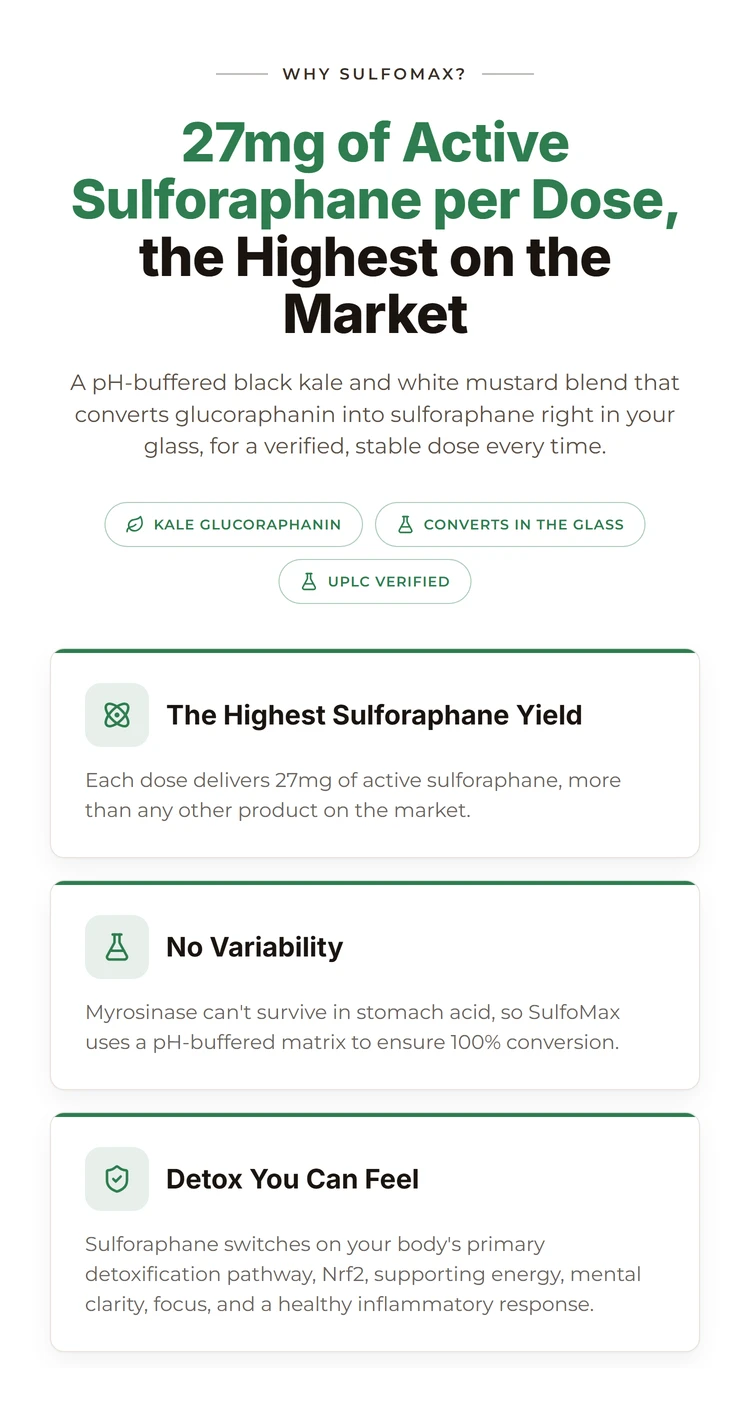
SulfoMax is a powdered sulforaphane supplement that pairs black kale extract, standardized to 17% glucoraphanin at 360mg per serving, with 240mg of white mustard (Sinapis alba) seed powder as a myrosinase source. When you mix it with lukewarm water and let it sit for five minutes, the myrosinase converts glucoraphanin into active sulforaphane right in the glass. This activates the Nrf2 pathway, which supports antioxidant redox balance, a healthy inflammatory response, and neuronal resilience for mental clarity and focus.
Our SulfoMax Story
A number of years ago, sulforaphane exploded in popularity as interest in longevity science grew. The pitch was simple: grow broccoli sprouts at home and consume them for glucoraphanin, the sulforaphane precursor, along with myrosinase, the enzyme that converts glucoraphanin into sulforaphane. In practice, growing and eating sprouts turned out to be more effort than most people wanted, which opened the door for a more convenient sulforaphane option. The trouble is, building one is not easy. Sulforaphane itself is unstable, so pure sulforaphane products degrade over time. The common workaround was to combine a glucoraphanin source with a myrosinase source in a capsule and hope conversion happened after swallowing.
We wanted to know whether that actually worked, so we tested it. Our lab runs a Distek Dissolution Tester, which we normally use to see how capsules and tablets dissolve in simulated gastric fluid or simulated intestinal fluid. We put sulforaphane products from across the market into that simulated gastric fluid, and none of them met the sulforaphane conversion listed on their labels. The reason became clear quickly: myrosinase is highly sensitive to pH, and at the acidic levels found in the stomach it barely works. That means a capsule combining glucoraphanin and myrosinase converts only a fraction of its available glucoraphanin, and the same limitation applies to eating raw sprouts.
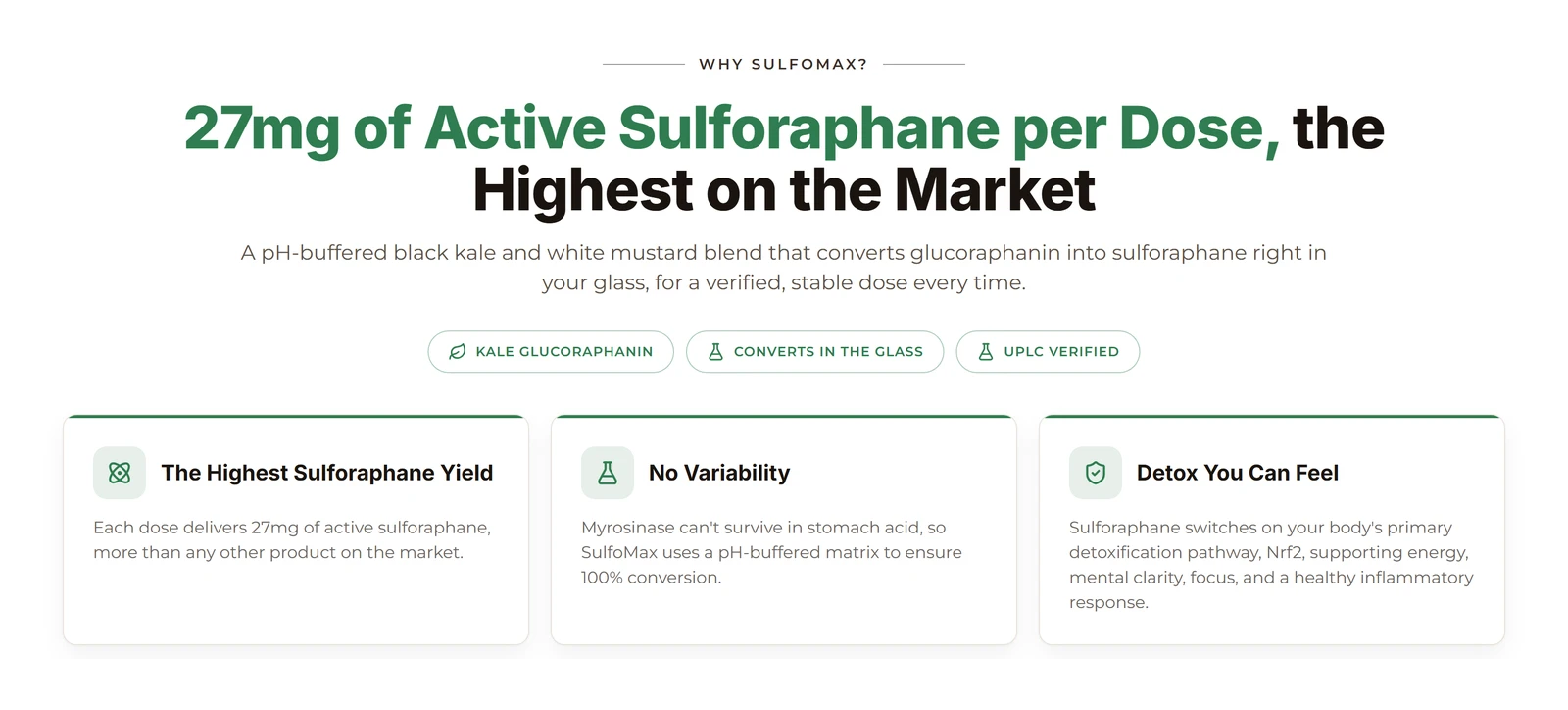
SulfoMax solves this by moving the conversion outside your body. Because sulforaphane degrades rapidly from heat, we deliberately kept it out of a capsule and built it as a powder instead. You mix it with lukewarm water and let it rest for five minutes, giving the white mustard myrosinase time to convert glucoraphanin into active sulforaphane before you drink it. This bypasses the acid-driven enzyme degradation that limits conventional products. We chose Sinapis alba because it carries the highest myrosinase content among the brassicas we evaluated, and we included 12mg of ascorbic acid per serving as a catalyst to support that conversion. The result is a powder engineered to deliver the highest sulforaphane content we have measured.
Benefits
- Antioxidant redox balance: Activated sulforaphane triggers the Nrf2 pathway to support your body's own antioxidant defenses and maintain healthy redox balance.
- Healthy inflammatory response: Sulforaphane modulates NF-κB and TLR4 signaling to support a healthy inflammatory response throughout the body.
- Mental clarity and focus: Sulforaphane helps protect neurons from oxidative stress, while also dampening neuroinflammation. Together, this supports sharper mental clarity and sustained focus.
- Long-term cellular resilience: Nrf2 activation supports healthy aging pathways and lasting cellular resilience over time.
SulfoMax delivers the felt benefits of activated sulforaphane in a single morning serving, best taken with food: a clean, steady sense of clarity and resilience from a well-balanced redox environment and a healthy inflammatory response. Because the glucoraphanin converts to active sulforaphane right in your glass, you get the real experiential payoff that capsule-based products struggle to deliver.
Quality and Standardization
- Glucoraphanin Standardization: Our PurebkaleTM black kale extract (Brassica oleracea) is standardized to 17% glucoraphanin, delivering 360mg of extract per 3g serving.
- Myrosinase Source: We pair PurebkaleTM with 240mg of white mustard (Sinapis alba) seed powder to supply the active myrosinase enzyme needed for in-glass conversion. A small amount of vitamin C is added, in order to support myrosinase enzyme activity. Additionally, potassium bicarbonate is added to ensure the perfect pH level for maximal myrosinase enzyme activity.
- Verified Sulforaphane Content: Our analytical testing confirmed SulfoMax produces 27.00 mg of sulforaphane, and holds that level through simulated gastric & intestinal fluid conditions.
Mechanism of Action
- In-glass enzymatic conversion: Myrosinase from white mustard seed hydrolyzes glucoraphanin into active sulforaphane during the five-minute mixing window, which bypasses the acidic stomach environment that inactivates the enzyme.
- Keap1 cysteine modification: Sulforaphane covalently modifies reactive cysteine residues on Keap1, which frees the Nrf2 transcription factor to translocate into the nucleus.
- ARE-driven gene expression: Once nuclear, Nrf2 binds antioxidant response elements to upregulate endogenous cytoprotective and detoxification enzymes.
- NF-κB modulation: Sulforaphane influences NF-κB signaling, helping regulate cytokine production and support a balanced inflammatory response.
- TLR4 Antagonism: Sulforaphane antagonizes TLR4 activity, which supports a balanced inflammatory response.
- Neuronal cross-protection: Nrf2 activation in astrocytes conditions neighboring neurons against oxidative insult and reinforces neuronal resilience.
Overview of the Science
The core rationale behind SulfoMax rests on the Nrf2/ARE pathway. Research suggests that sulforaphane modifies specific cysteine residues on Keap1, which releases and activates the Nrf2 transcription factor so it can bind antioxidant response elements and upregulate endogenous cytoprotective enzymes.[1][2] Work in aging and oxidative stress models indicates that sulforaphane may help reactivate cellular antioxidant defenses through Nrf2/ARE signaling,[3] and some studies point to a lysosome-dependent transcriptional program that may help mitigate oxidative stress.[4]
Beyond antioxidant defense, some studies indicate that sulforaphane may help support a healthy inflammatory response. Research in human monocytes suggests sulforaphane can modulate cytokine production through NF-κB and MAPK-dependent mechanisms,[5] while work in primary human T-cells indicates it may influence inflammatory responses by shifting redox status.[6] Additional research suggests sulforaphane may help support connective tissue by influencing matrix-degrading proteases,[7] and skin models point to inflammatory and antioxidant modulation through the KEAP1-NRF2 pathway.[8]
For neuronal resilience, research suggests sulforaphane may help protect neurons against oxidative insult, with astrocyte-mediated Nrf2 activation observed in cell models.[1] Additional animal studies indicate sulforaphane may support spatial learning and memory and influence amyloid-beta dynamics,[9][10] and other work suggests it may help preserve brain function under oxidative and metabolic stress through Nrf2-linked pathways.[11][12]
[1] Kraft AD et al. Journal of Neuroscience. 2004.
[2] Hu C et al. Chemical Research in Toxicology. 2011.
[3] Kubo E et al. Scientific Reports. 2017.
[4] Li D et al. Autophagy. 2021.
[5] Reddy SA et al. International Immunopharmacology. 2015.
[6] Liang J et al. Frontiers in Immunology. 2018.
[7] Davidson RK et al. Arthritis & Rheumatism. 2013.
[8] Ma C et al. Cell Death and Disease. 2023.
[9] Kim HV et al. Amyloid. 2013.
[10] Hou TT et al. Journal of Alzheimer's Disease. 2018.
[11] Li X et al. Frontiers in Cellular Neuroscience. 2022.
[12] Wang G et al. International Journal of Clinical and Experimental Pathology. 2024.
Ingredients
- Function: Vitamin C is a myrosinase enzyme co-factor, and by including a small amount in Sulfomax, it helps support white mustard seed derived myrosinase activtiy.
- Source: Ascorbic Acid.
- Amount per serving: 12mg.
- Standardization: not applicable, delivered as pure Ascorbic Acid.
- Primary benefit: helps support myrosinase enzyme activity.
- Function: contributes to the pH buffering system that supports in-glass glucoraphanin conversion.
- Source: Potassium Bicarbonate.
- Amount per serving: 234mg.
- Standardization: not applicable, sourced from Potassium Bicarbonate.
- Primary benefit: helps maintain a neutral mixing environment so myrosinase can work properly before consumption.
- Function: supplies glucoraphanin, the precursor that converts to active sulforaphane.
- Source: black kale (Brassica oleracea).
- Amount per serving: 360mg.
- Standardization: 17% Glucoraphanin.
- Primary benefit: promotes Nrf2 activation once converted to sulforaphane in the glass.
- Function: provides the myrosinase enzyme that hydrolyzes glucoraphanin into sulforaphane.
- Source: white mustard (Sinapis alba) seed.
- Amount per serving: 240mg.
- Standardization: not standardized, used as whole seed powder for its native myrosinase activity.
- Primary benefit: drives the five-minute in-glass conversion that bypasses the acidic stomach environment.
LACTOSE FREEGLUTEN FREENON-GMOVEGAN


Trust Through Transparency
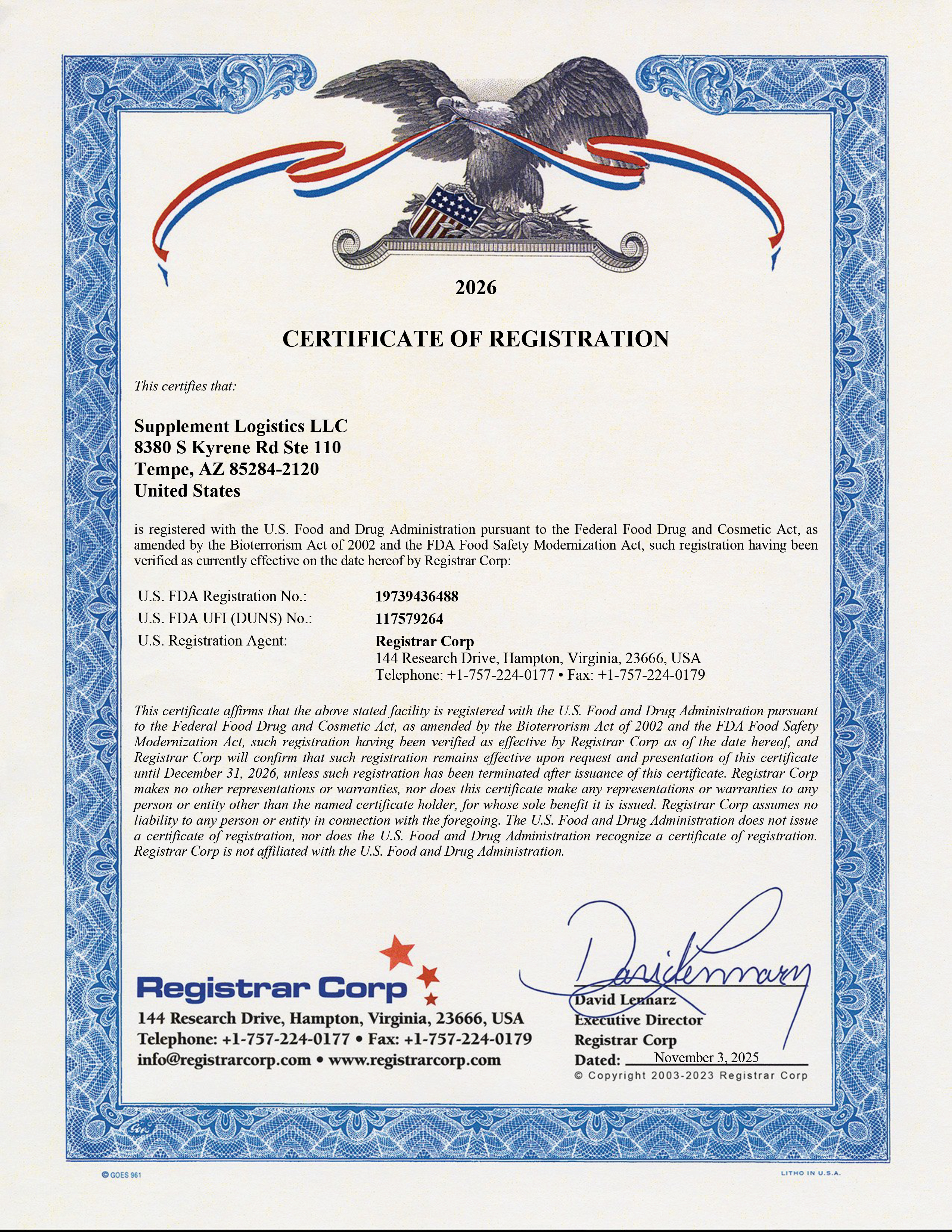
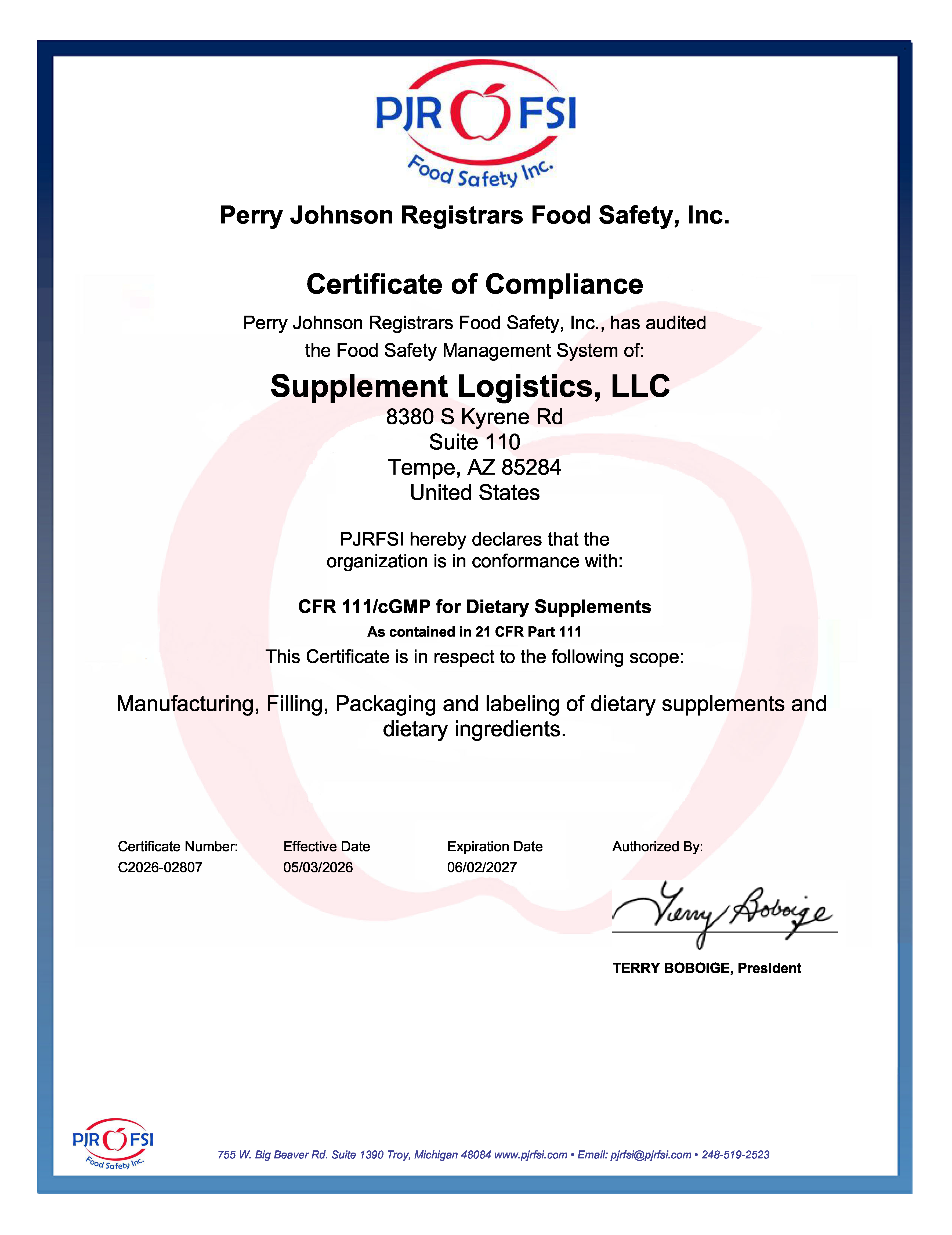
Your health matters, which is why we only use the best 3rd party ISO accredited labs and cGMP certified and FDA registered facilities right here in the USA
Learn more about our lab testing