
Tongkat Ali Root: Where The Actives Come From

 Add us as a preferred source on Google
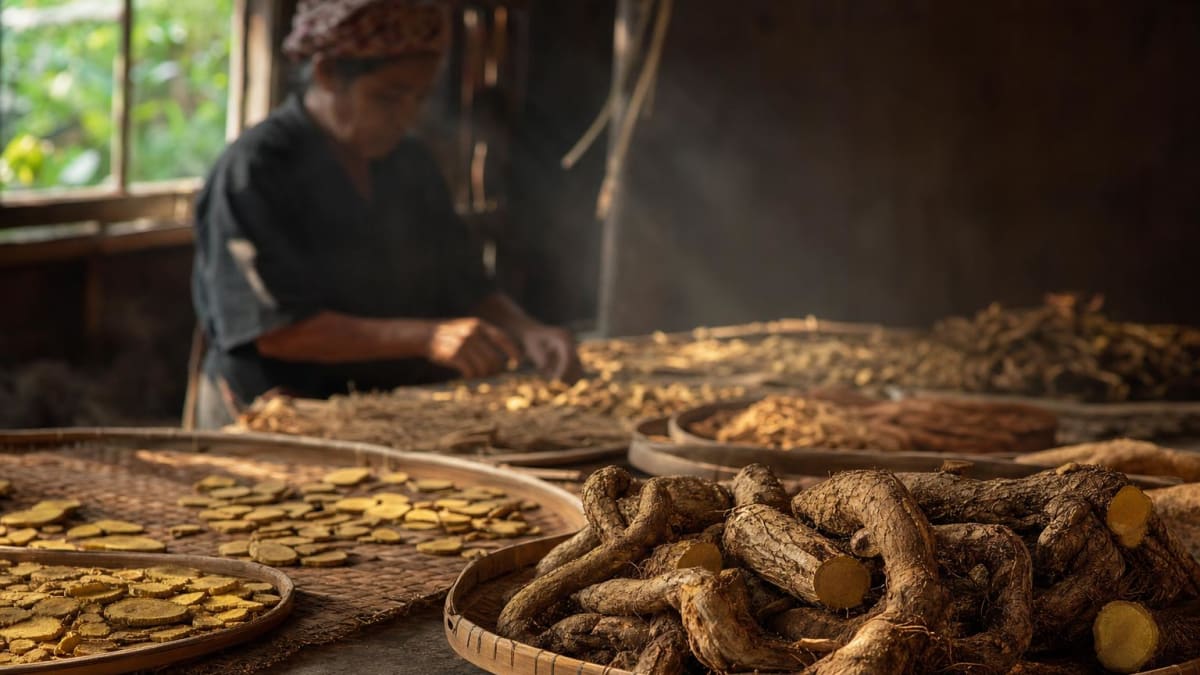
When people talk about tongkat ali, they usually mean one specific thing: the root of Eurycoma longifolia, a slow-growing Southeast Asian plant whose underground portion carries the bioactive compounds the research cares about. The leaves, stem, and bark are not where the action is. If you want to understand what you are actually buying, it pays to start with the root itself, where it comes from, and why standardizing it is the whole ballgame. This is the piece of the tongkat ali story that gets glossed over most often, so we want to give it its due.
Why the Root is the Part That Matters
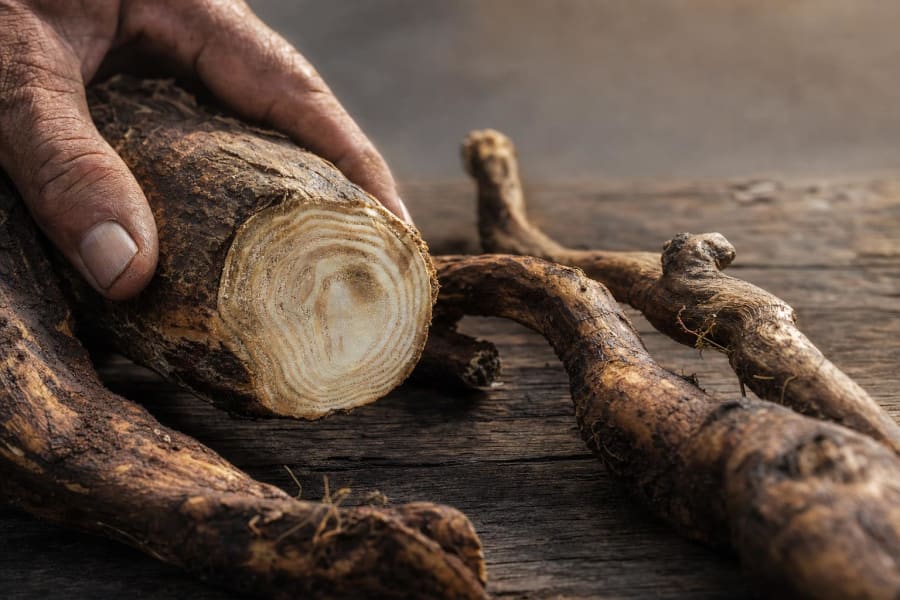
Tongkat ali, also called longjack, is Eurycoma longifolia, and nearly all of its traditional and studied use centers on the root. The quassinoids that researchers measure, most notably eurycomanone, are concentrated in the root rather than the aerial parts of the plant. This is why serious extracts are made from root material and standardized to a defined eurycomanone content rather than to a vague whole-plant marker. For the full landscape of forms, uses, and science, our Tongkat Ali: The Complete Guide is the hub to start from.
The root has long been studied in Malaysia and surrounding regions, where it was used traditionally in preparations for vitality and physical resilience. Modern reviews of the plant's chemistry confirm the root as the source of its characteristic quassinoids and other constituents.[1] That is the practical reason we build everything around root extract: it is where the compounds the clinical literature actually tests are found.
Eurycomanone is the headline marker, but the root itself is more than a single molecule. A full-spectrum root extract carries the broader constituent profile alongside a defined eurycomanone level, which is part of why we treat standardization as a floor to verify, not the entire picture.
How We Source and Standardize the Root
| 2% Eurycomanone | 10% Eurycomanone | |
|---|---|---|
| Character | Full-spectrum, balanced | More concentrated |
| Extract profile | Complete root profile | Higher eurycomanone |
| Customer feedback | Balanced first experience | Noticeably stronger |
| Per capsule | 200mg | 100mg |
Root quality varies enormously. Wild Eurycoma longifolia grows slowly, and the eurycomanone content of raw root material is not consistent from one lot to the next. That variability is exactly why standardization exists, and why we verify eurycomanone content by analytical testing rather than taking a supplier's word for it. One of our longtime botanical advisors, Kerry Hughes, an ethnobotanist, has advised us on sourcing authentic, well-characterized botanical material.
We carry root extract at two defined eurycomanone concentrations so you can match the extract to your goal. The Tongkat Ali 2% Eurycomanone is our full-spectrum, balanced extract: it carries the complete root profile alongside a defined eurycomanone level, making it a reasonable first experience with the standalone root. The Tongkat Ali 10% Eurycomanone is a more concentrated root extract that customers describe as noticeably stronger. The same 2% root extract is also available as a Tongkat Ali Powder for those who prefer to measure their own.
A fair warning that customers raise often: the root is genuinely bitter. Reviewers of the powder describe the taste in vivid terms, so if that is a deal-breaker, the capsules spare you from it. To work through which concentration and format fits your goal, explore our guide to tongkat ali extracts and our Choosing The Right Tongkat Ali page.
How We Verify What is in the Root Extract
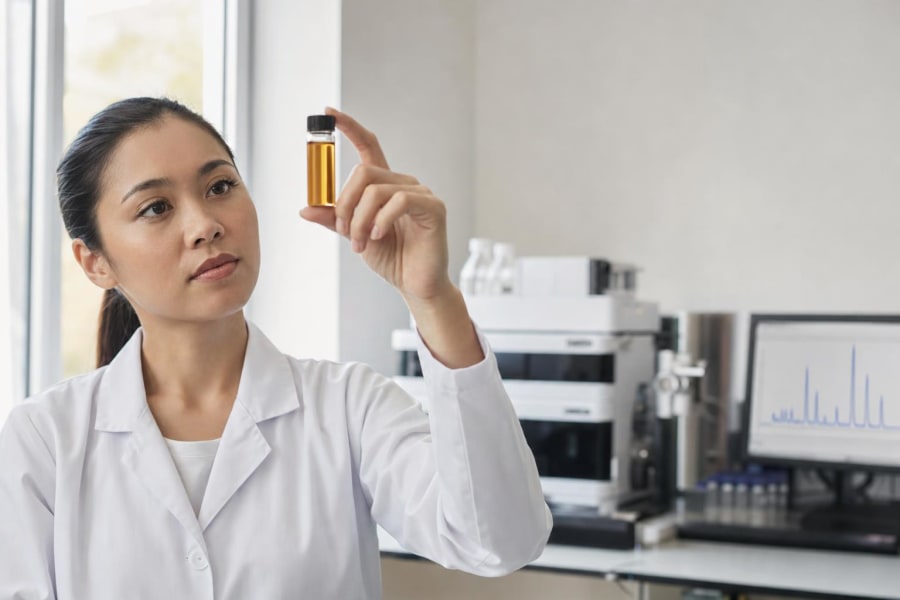
Standardization only means something if it is verified. Because eurycomanone is the compound the bioactivity literature keeps pointing to, it is also the compound we test for, rather than relying on a nominal label figure. As our team has discussed on our subreddit, eurycomanone appears to be the primary marker of interest for tongkat ali's activity, so confirming its content is central to confirming the extract itself.
Every batch is tested at ISO-accredited third-party labs, and we publish the results. You will find a third-party COA on each product page, so you can check the eurycomanone content and the identity and purity testing for yourself before you buy. That is the whole point of doing the analytical work: it gives you confidence that what is in the bottle matches what is on the label, which matters more with a botanical whose raw-material potency naturally varies.
What the Research Suggests the Root Supports
Tongkat ali root has long been studied for its role in supporting the body's own hormonal signaling rather than adding anything external. The proposed mechanism is at the level of the hypothalamic-pituitary-gonadal axis, where the root's constituents are thought to help support healthy testosterone levels already within the normal range rather than simply raising a hormone directly. Reviews of the clinical literature frame it as an adaptogen-like support for male reproductive health.[2]
The evidence itself is mixed, and in a fairly interesting way. Effects appear strongest in men with lower baseline androgen status, and more muted in young, already-healthy men. A 2021 trial in men with androgen deficiency reported improvements in strength and cardiorespiratory fitness,[3] while studies in young, trained males have shown more modest hormonal signals.[4] Research also suggests the root may help support a balanced stress response, with one 2013 study reporting changes in stress hormone profile and mood state in moderately stressed subjects.[5]
We keep a plain-language Tongkat Ali research snapshot if you want to see the studies grouped by outcome. For a fuller walk through the upside, our spoke on tongkat ali benefits covers the ground benefit by benefit.
Choosing a Root Extract or a Built Stack
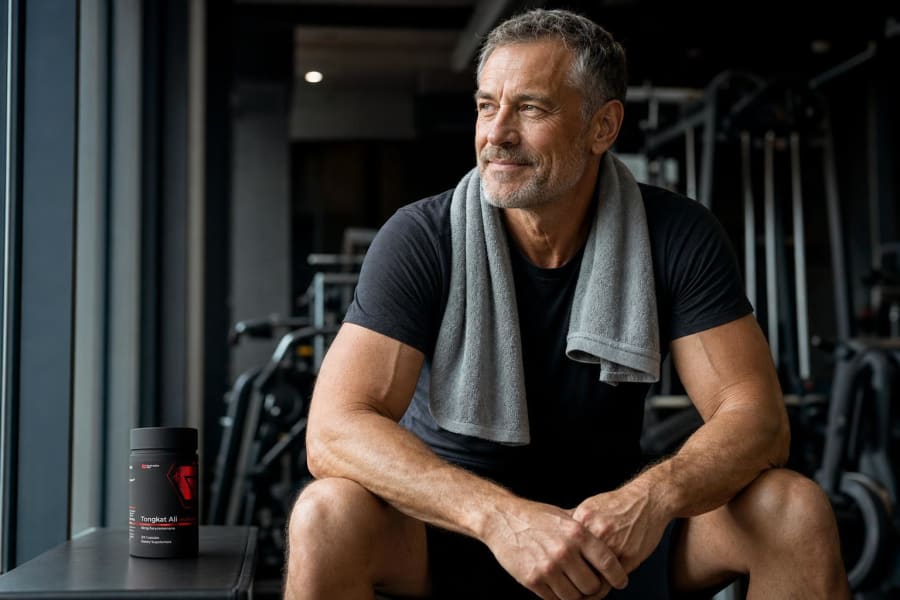
If you want the root on its own, the 2% full-spectrum extract is a reasonable starting point, with the 10% available when you want something more concentrated. If you would rather start with a formula built around the root, Eurycomax is our optimized tongkat ali stack and, as our product specialist Emiel Bakker put it on Reddit, probably the best beginner option because it produces a very balanced effect with little to no drawbacks, and he does not think you have to cycle it. On that note, we do not generally suggest cycling tongkat ali; community members who cycle are describing their own routines, not our guidance.
For dosing specifics by standardization level, timing, and how to take it, the hub links out to the dedicated dosing guides rather than us repeating them here. You can also compare tongkat ali root against other vitality botanicals in our tongkat ali vs ashwagandha breakdown, or browse the wider Tongkat Ali Supplements collection.
Start With a Verified Root Extract
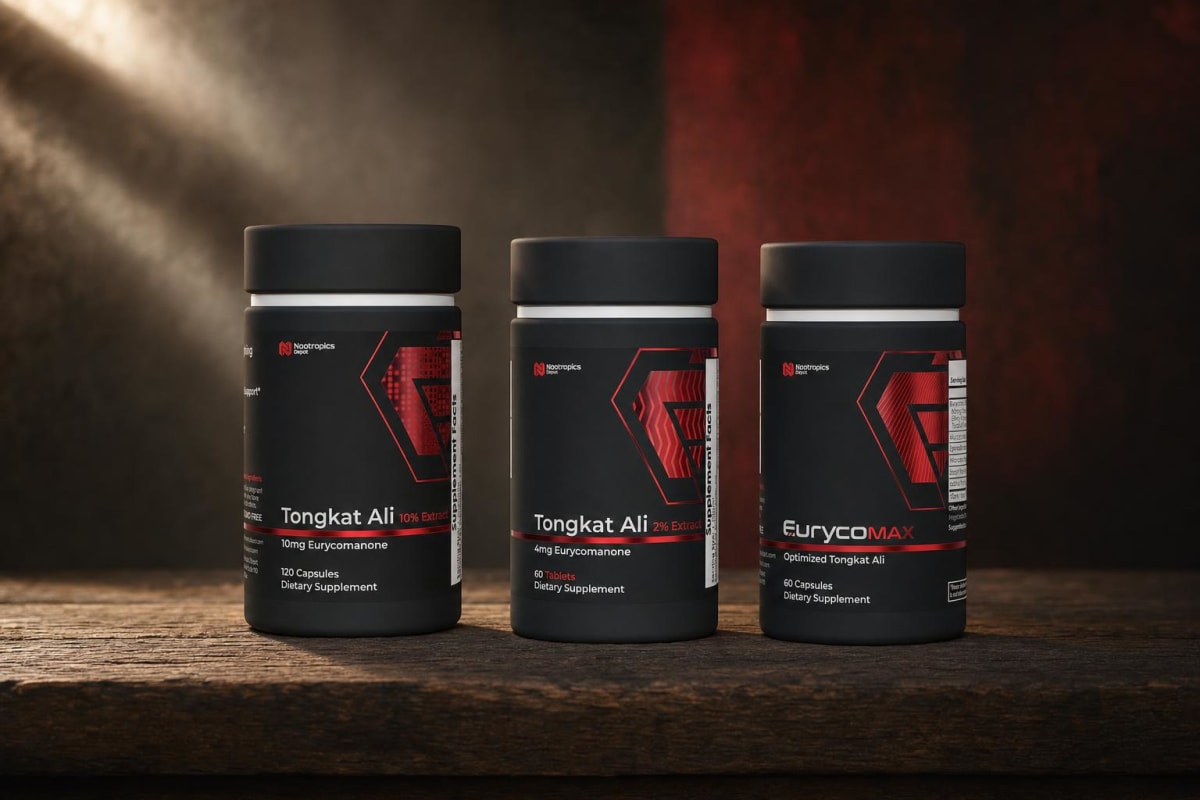
The root is the part that matters, and standardization is only as good as the testing behind it. Browse our Vitality Supplements and check the third-party COA on any tongkat ali product page so you know exactly what you are getting before you buy.
Research & References (5)Show sources
- Review on a Traditional Herbal Medicine, Eurycoma longifolia Jack (Tongkat Ali): Its Traditional Uses, Chemistry, Evidence-Based Pharmacology and Toxicology
- Eurycoma Longifolia as a potential adoptogen of male sexual health: a systematic review on clinical studies.
- Exercise associated or not to the intake of Eurycoma longifolia improves strength and cardiorespiratory fitness in men with androgen deficiency.
- Effects of Eurycoma Longifolia Jack Supplementation Combined with Resistance Training on Isokinetic Muscular Strength and Power, Anaerobic Power, and Urinary Testosterone: Epitestosterone Ratio in Young Males
- Effect of Tongkat Ali on stress hormones and psychological mood state in moderately stressed subjects