
Research Snapshot
MicroMag
A synthesis of the peer-reviewed evidence for MicroMag across bone health, stress, sleep and mood, graded by scientific consensus and reviewed by our Scientific Advisory Board.
See the Research
 Bone Health
Can Magnesium support bone health?
Evidence from 14 studies
What the research shows
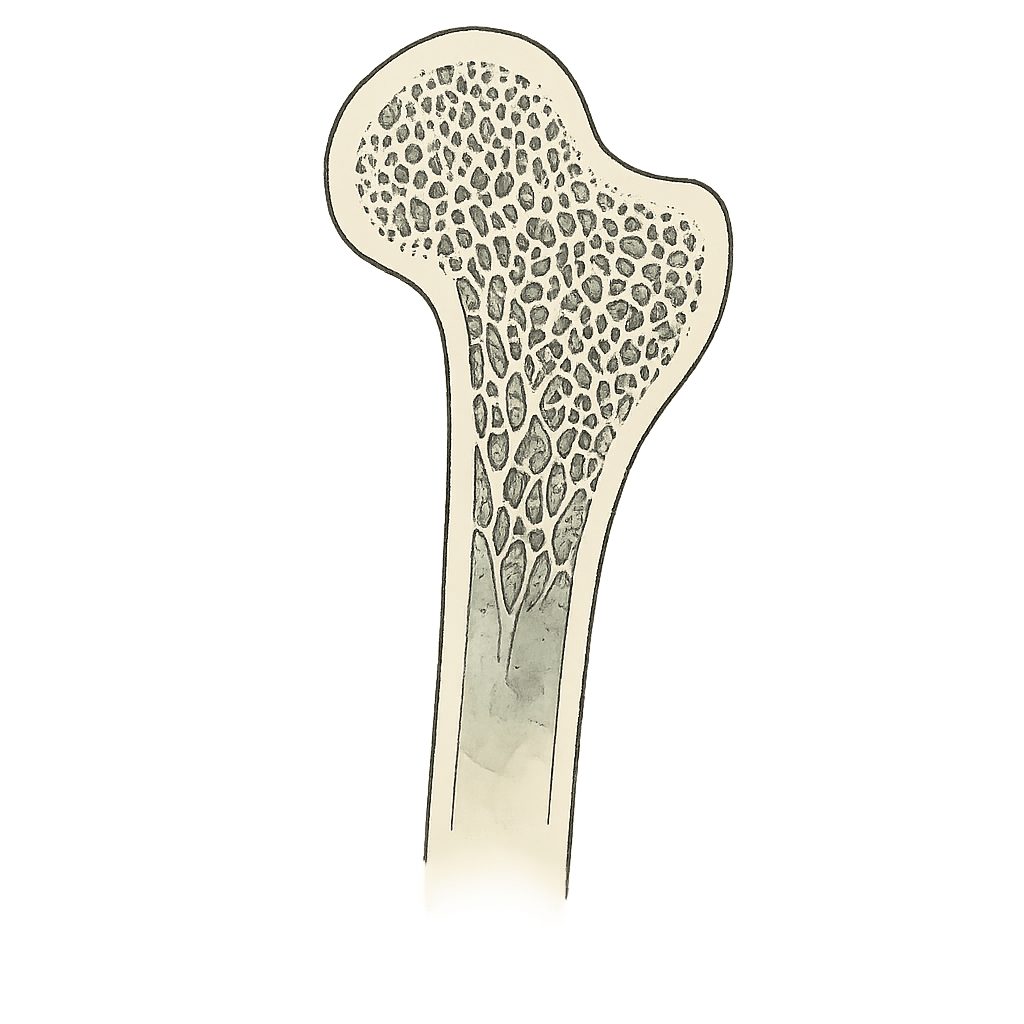
Magnesium is essential for bone health, contributing to bone density and supporting healthy bones. Adequate magnesium intake and supplementation can enhance bone mineral density and support overall bone integrity, making it a vital nutrient for maintaining healthy bones.
View the top studies
The Journal of clinical endocrinology and metabolism | T. Carpenter et al.· | 78 Citations | 2006
Randomized Control Trial (RCT) , Rigorous Journal , Highly Cited
Magnesium supplementation in healthy girls significantly increased accrual in integrated hip bone mineral content.
Biometals | M. Rondanelli et al | 32Citations·M. Rondanelli et al.· Biometals | 2021
Systematic Review
A cause and effect relationship has been established between dietary intake of magnesium and maintenance of normal bone.
The Journal of clinical endocrinology and metabolism | H. Dimai et al. | 83Citations | 1998
Randomized Control Trial (RCT) , Highly Cited , Controlled experimental study
Oral magnesium supplementation may suppress bone turnover in young adults, potentially reducing bone loss associated with high bone turnover, such as age-related osteoporosis.
The Journal of nutritional biochemistry | M. M. Belluci et al. | 26 Citations | 2019
Randomized Control Trial (RCT) , Animal Trial
Severe magnesium deficiency impairs bone mineral density and exacerbates inflammatory bone resorption in a rat model of periodontitis.
 Stress
Can Magnesium support stress levels?
Evidence from 10 studies

What the research shows
These studies suggest that magnesium supplementation can support stress levels, especially when combined with vitamin B6 or other supplements like B vitamins, rhodiola, and green tea.
View the top studies
PLoS ONE | E. Pouteau et al. | 44 | 2018
Randomized Control Trial (RCT) , Rigorous Journal
Oral magnesium supplementation alleviated stress in healthy adults with low magnesemia, but combined with vitamin B6 showed greater benefit for severe/extremely severe stress.
Nutrients | A. Botturi et al. | 83 | 2020
Very Rigorous Journal , Highly Cited , Systematic Review
Magnesium supplementation could be beneficial in depressive symptoms, but the results are not univocal and need further evaluation.
Nutrients | N. Boyle et al. | 86 | 2017
Very Rigorous Journal , Highly Cited , Systematic Review
Magnesium supplementation has a beneficial effect on subjective anxiety in anxiety vulnerable samples, but the quality of the existing evidence is poor and further confirmation is needed.
Stress and Health | L. Noah et al. | 16 | 2021
Randomized Control Trial (RCT)
Magnesium supplementation, with or without vitamin B6, can provide a meaningful clinical benefit in daily life for individuals with stress and low magnesemia.
 Sleep
SleepCan Magnesium support sleep?
Evidence from 12 studies

What the research shows
These studies suggest that magnesium supplementation may support sleep, particularly in older adults, by improving sleep quality, sleep efficiency, and supporting healthy sleep patterns.
View the top studies
Sleep Medicine | R. Allen et al. | 3 | 2003
Randomized Control Trial (RCT)
Oral magnesium supplementation improves slow-wave sleep, delta and sigma frequency EEG power, and reverses the aging effect on cortisol release and renin-angiotensin-aldosterone system activity in elderly adults.
Sleep | Y. Zhang et al. | 6 | 2021
Very Rigorous Journal
Higher magnesium intake is associated with better sleep quality and reduced likelihood of short sleep (7 hours).
Nutrition Journal | O. Barna et al. | 2 | 2021
Randomized Control Trial (RCT) , Very Rigorous Journal
Magnesium oxide monohydrate treatment resulted in greater improvement in sleep quality compared to placebo.
Pakistan Journal of Health Sciences | A. Liaqat et al. | 0 | 2023
Randomized Control Trial (RCT)
Magnesium supplementation in elderly people has highly significant effects in improving insomnia and quality of sleep.
 Mood
MoodCan magnesium support mood?
Evidence from 15 studies

What the research shows
Some studies suggest magnesium supplementation can improve mood and support healthy mood, while other studies indicate it may not be more effective than a placebo.
View the top studies
BJPsych Open | D. Phelan et al. | 25 | 2018
Rigorous Journal
Magnesium supplementation was associated with a decline in depressive symptoms in uncontrolled trials but not in placebo-controlled trials.
PLoS ONE | E. Tarleton et al. | 79 | 2017
Randomized Control Trial (RCT) , Rigorous Journal
Magnesium supplementation for 6 weeks resulted in a clinically significant net improvement in depression symptoms and anxiety scores.
Obstetrics & Gynecology | F. Facchinetti et al. | 156 | 1991
Randomized Control Trial (RCT) , Highly Cited
Oral magnesium supplementation significantly reduced premenstrual mood changes.
Nutrients | A. Botturi et al. | 61 | 2020
Very Rigorous Journal
Supplementation with magnesium could be beneficial in reducing depressive symptoms.
Reviewed by Experts
Every research snapshot is checked by our independent Scientific Advisory Board: physicians, botanists and pharmacology researchers who verify the evidence grading and its interpretation.
Kerry Hughes
M.Sc., RH(AHG), FDN-P
Ethnobotanist & herbalist; Berkeley Herbal Center; principal at EthnoPharm.
View full profile →Lance Dreher
PhD, Nutritional Counseling
Performance nutrition & conditioning; four decades of applied training science.
View full profile →Dr. Lindsey Faucette
DO, FAAFP
Board-certified in Family & Integrative Medicine; Touro University College of Osteopathic Medicine.
View full profile →Francisco Chacon
PhD, Plant Biology
Botanical natural products & phytochemistry researcher, Penn State University.
View full profile →Meet the full Scientific Advisory Board →
How We Grade Consensus
For each benefit we retrieve the relevant peer-reviewed literature and classify every study by whether its findings support (Yes), partially or conditionally support (Possibly), or do not support (No) the claim. The donut shows the share of studies in each category; N is the number of studies analyzed for that benefit.
Grades reflect the weight and direction of the current evidence, not a guarantee of outcome, and the interpretation is verified by the Scientific Advisory Board.