About Palmitoylethanolamide Powder
Palmitoylethanolamide (PEA) is a naturally occurring fatty acid amide that your body produces to support healthy pain responses and nerve function. Our micronized PEA powder features particles reduced to optimal size for enhanced bioavailability, allowing you to experience the full benefits of this endogenous compound that supports comfort and neurological health.
Our PEA Story
Most PEA supplements use standard particle sizes that limit absorption potential. The science was clear: PEA's therapeutic benefits depend heavily on how well your body can actually absorb and utilize the compound. Typical offerings often fall short of their potential.
We partnered with specialized manufacturers to create a micronized version with significantly reduced particle size, dramatically improving dissolution and bioavailability. This isn't just another pain and inflammation supplement, it's PEA optimized for maximum therapeutic potential. Our rigorous testing ensures consistent particle size distribution and purity, giving you a PEA supplement that works as nature intended.
Benefits
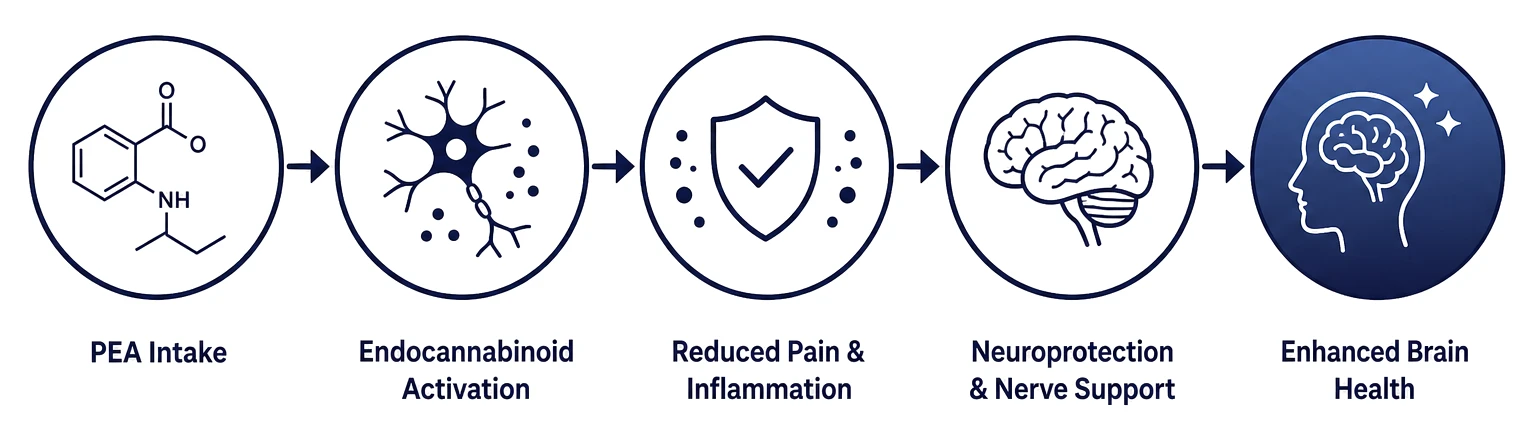
- Offers Pain Support: Palmitoylethanolamide naturally modulates your body's pain response pathways, reducing discomfort and supporting normal pain perception through its interaction with cannabinoid and vanilloid receptors.
- Helps Manage Inflammation: PEA supports a healthy inflammatory response by regulating mast cell activity and promoting balanced cytokine production, maintaining normal tissue function and comfort.
- Supports Nerve Health: This fatty acid amide provides neuroprotective benefits by supporting nerve cell integrity and promoting healthy nerve signal transmission throughout your nervous system.
- Promotes Cognitive Health: PEA crosses the blood-brain barrier to support neuronal health and maintain healthy cognitive function through its protective effects on brain tissue.
The micronized formulation of our PEA powder features ultra-fine particles that enhance absorption and bioavailability compared to standard PEA preparations. This particle reduction technology ensures your body can effectively utilize this naturally occurring compound, making it an ideal choice for comprehensive support for your nerve health and overall wellbeing.
Quality and Standardization
- Micronized Formulation: Our PEA powder utilizes advanced micronization technology to reduce particle size for enhanced dissolution and bioavailability compared to standard formulations.
- High Purity Standards: Each batch is rigorously tested for purity and potency using HPLC analysis to ensure consistent quality and absence of contaminants.
- Third-Party Verification: We validate identity, purity, and potency through independent laboratory testing at our third-party labs for complete transparency.
- Precise Dosing: Our standardized powder allows for accurate 400mg serving measurements, ensuring consistent dosing for optimal support of pain pathways and nerve function.
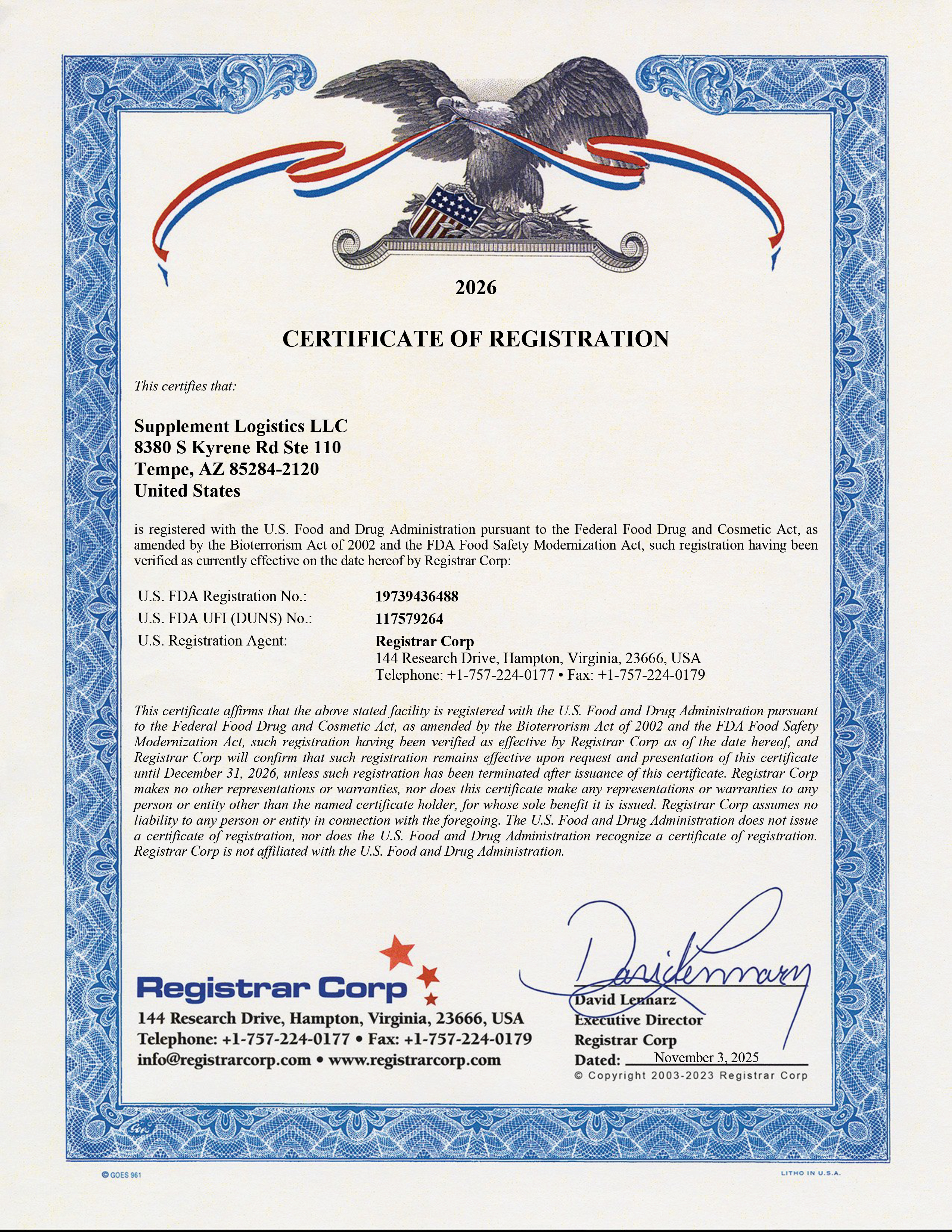
- cGMP Manufacturing: Produced in FDA-registered facilities following current Good Manufacturing Practices to guarantee pharmaceutical-grade quality and safety standards.
Mechanism of Action
- Endocannabinoid System Modulation: PEA activates PPAR-alpha receptors and indirectly influences cannabinoid receptors CB1 and CB2, helping to regulate the body's endocannabinoid system which controls pain signaling and inflammatory responses.
- Mast Cell Stabilization: This fatty acid amide helps stabilize mast cells, preventing the excessive release of histamine and other inflammatory mediators that contribute to pain and inflammation cascades throughout the body.
- Nerve Growth Factor Protection: PEA supports the production and activity of nerve growth factor (NGF), a crucial protein that promotes nerve cell survival, regeneration, and proper function in both peripheral and central nervous systems.
- Glial Cell Regulation: By modulating microglial activation in the brain and spinal cord, PEA helps maintain healthy neuroinflammatory responses and supports overall cognitive function through proper glial-neuronal communication.
Overview of the Science
Research on PEA's effects spans multiple decades, with early studies from the 1950s establishing its role as a natural Pain and Inflammation modulator [1]. Large-scale systematic reviews and meta-analyses demonstrate PEA's effectiveness in supporting healthy pain responses, particularly in chronic conditions affecting nerve function [2][3]. Clinical trials have shown PEA's potential neuroprotective properties in cerebral ischemia models, suggesting its value for brain health maintenance [4]. Additionally, research indicates PEA may offer benefits for neurological conditions, with studies examining its effects in Parkinson's disease patients showing promising adjunctive therapy results [5].
The therapeutic potential of PEA was first recognized in 1957 when researchers identified it as a naturally occurring anti-inflammatory agent [6]. Early prophylactic studies in the 1970s explored PEA's role in respiratory tract health, establishing a foundation for understanding its broader biological functions [7]. Modern clinical investigations continue to expand our knowledge of PEA's mechanisms, particularly its interaction with peroxisome proliferator-activated receptors and its ability to modulate cellular responses to discomfort and stress.
[1] Lang-Illievich K et al. Nutrients. 2023;15(6):1350.
[2] Schweiger V et al. Nutrients. 2024;16(11):1653.
[3] Caltagirone C et al. Transl Stroke Res. 2016;7(1):54-69.
[4] Brotini S et al. CNS Neurol Disord Drug Targets. 2017;16(6):705-713.
[5] Masek K et al. Eur J Clin Pharmacol. 1974;7:415-419.
[6] Kuehl FA Jr et al. J Am Chem Soc. 1957;79:5577-5578.
Ingredients
Palmitoylethanolamide (PEA):
- N-Palmitoylethanolamide
- 400mg per serving
- Micronized powder formulation
The micronized formulation is essential for PEA's effectiveness. Standard PEA has poor bioavailability due to its lipophilic nature and large particle size. Our advanced micronization process reduces particles to 2-10 microns, dramatically improving dissolution rates and absorption. This smaller particle size allows PEA to be more readily absorbed in the gastrointestinal tract, ensuring you get the full therapeutic potential from each 400mg dose. Without micronization, much of the PEA would pass through your system unused, making particle size reduction a critical factor in supplement quality for those seeking comprehensive herbs for nerve pain support.



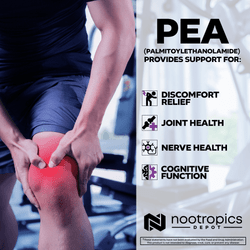


 Pain Support
 Inflammation
 Nerve Support
 Cognition